Why engagement is the heart of modern digital banking.
Digital banking has moved from being a convenient option to an essential expectation. Banks and credit unions no longer compete solely on interest rates or branch locations; they compete on the quality of the digital experiences they offer. Within this context, user engagement has emerged as one of the most critical indicators of success, with login frequency serving as a particularly telling metric. Every time an account holder logs into their digital banking platform, they are actively engaging with their finances, exploring features, and reinforcing the habit of interacting with the institution.
Login frequency as a measure of success or overrated?
Login frequency isn’t just a number, it’s a reliable signal of how engaged users are. Those who log in regularly tend to be more informed, more empowered, and more likely to take advantage of the platform’s full suite of services.
Infrequent logins, on the other hand, can indicate disengagement, which may lead to missed updates, overlooked opportunities, and even account attrition. Far from being an overrated metric, login frequency provides a clear view into the health of the digital relationship between account holder and institution.
Regular logins also build familiarity and confidence. Digital banking platforms often include multiple accounts, linked services, and a range of tools that can feel overwhelming at first. Each interaction allows users to explore at their own pace, gradually reducing friction and encouraging them to engage with advanced features rather than just checking balances.
For a real-world example, one of our valued customers, Pioneer Federal Credit Union, saw logins nearly double, from approximately 870,000 in January 2024 to over 1.7 million by April 2025, a 97% increase that highlights the platform’s role as an essential everyday banking hub.
This surge in activity drove deeper engagement, with balance inquiries up 70% and account history views rising 67%.
Read our exclusive customer story to discover how Pioneer Credit Union leveraged Tyfone’s digital banking solution to transform member engagement.
Turning engagement into self-service action.
Once you have established the importance of logins and engagement, the next logical step is to focus on self-service capabilities. In modern digital banking, providing self-service features isn’t just convenient, it’s a powerful driver of engagement and adoption. These features give users control over their finances, empowering them to make decisions without waiting for branch hours or call center assistance.
Key self-service capabilities.

Account management.
Users can update personal information, manage linked accounts, or set up notifications and alerts. This reduces friction and allows account holders to maintain accurate, up-to-date information, improving both user experience and operational efficiency for the institution.

Payments and transfers.
Instant payments, recurring transfers, and bill pay options enable users to manage cash flow on their own terms. When these features are intuitive and reliable, users are more likely to rely on digital banking as their primary channel for financial management.

Product enrollment.
Digital self-service allows account holders to open new accounts, activate rewards programs, or apply for certificates of deposit and loans without ever visiting a branch. This not only enhances convenience but also drives product adoption.

Financial insights.
Many platforms now provide self-service tools for budgeting, spending analysis, and goal tracking. These features encourage users to log in more frequently, as they offer tangible, actionable insights into their financial health.
By enabling account holders to take control of these tasks digitally, institutions not only improve the user experience but also increase the likelihood of adoption for additional products and services. Self-service features create a powerful cycle: as users log in more frequently, they discover more features, and as they grow more comfortable with the platform, they log in more often.
Story continued below…
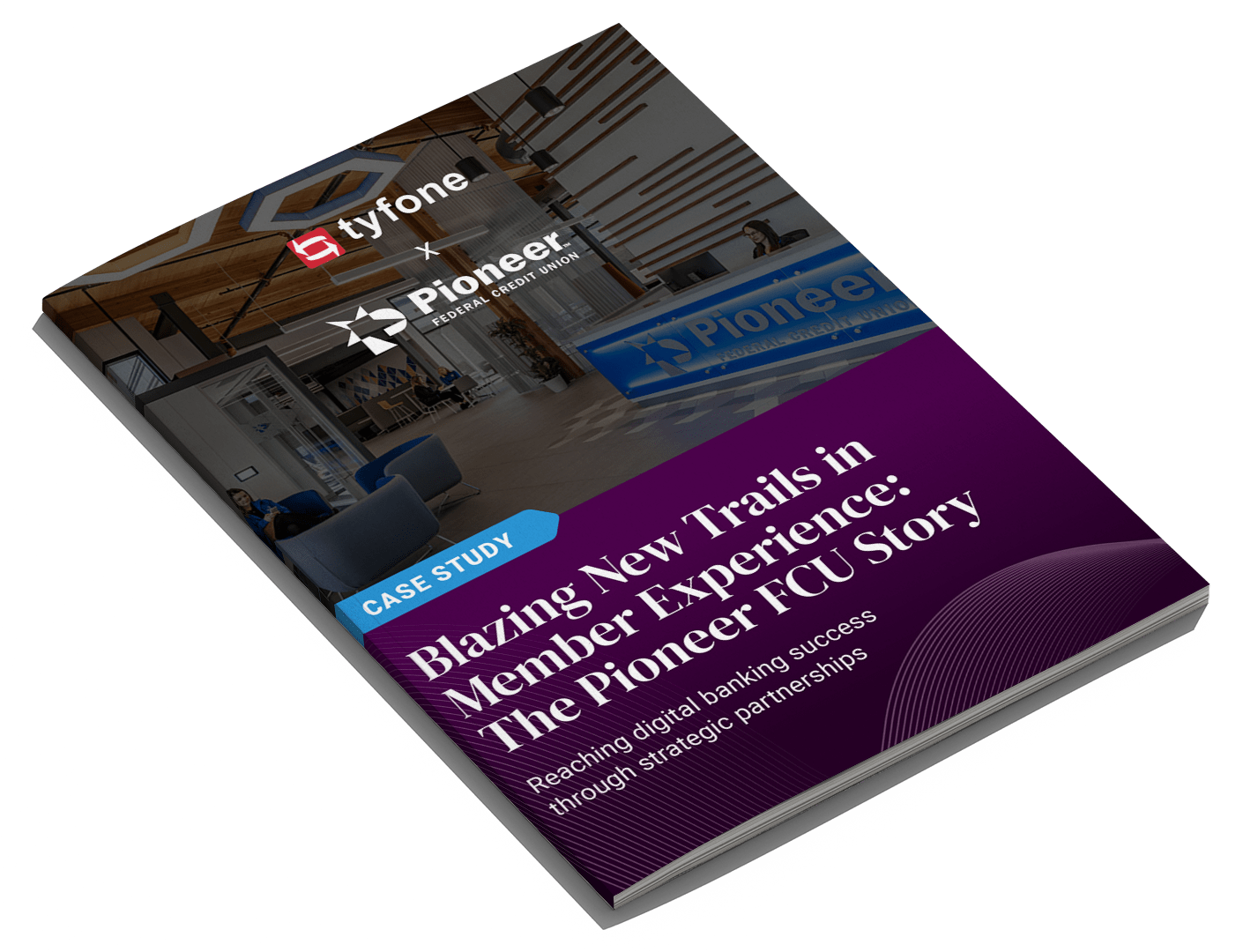
FREE CASE STUDY
Blazing new trails in member experience: The Pioneer FCU story.
In 2021, Pioneer transitioned from their legacy system to Tyfone’s nFinia Retail Digital Banking platform to offer members an ultra-modern banking experience. This move enabled the credit union to deliver a hyper-personalized digital journey while leveraging open banking and seamless third-party integrations.
Read our exclusive case study and discover how they upgraded their digital banking experience.
Making every login count: strategies that drive engagement.
Increasing login frequency isn’t about simply asking users to log in more often, it’s about making each login meaningful. When account holders find value in every interaction, they naturally return more frequently, creating a cycle of engagement that benefits both the user and the institution.
Financial institutions can encourage this by reducing friction and making the platform as accessible as possible. Streamlined login processes, such as biometrics or single sign-on, remove barriers and make it easier for users to access their accounts.
Once logged in, timely notifications about account activity, upcoming bills, or new features can prompt users to engage immediately, ensuring the platform remains relevant to their daily financial lives.
Other strategies help users discover and use the platform’s full capabilities.

Gamification and rewards.
Users earn points or recognition for completing tasks, exploring features, or meeting financial goals, encouraging repeated use.

Feature discovery.
Highlighting underused self-service tools or new capabilities sparks curiosity and promotes exploration.

Education and support.
Tutorials, FAQs, and interactive guidance give users confidence navigating the platform, which drives ongoing engagement.

Direct value to account holders.
Each meaningful login exposes users to insights, tools, and opportunities that help them manage money more efficiently, save time, and make better financial decisions.
The effect of these strategies becomes measurable when institutions track how engagement translates into results.

Feature usage.
Which self-service tools are actively being used and how often.

Product adoption.
Whether frequent users are enrolling in new accounts, loans, or rewards programs.

Retention and churn.
Whether more engaged users stay longer with the institution.

Customer satisfaction.
How users perceive the platform and the convenience it offers.
By connecting strategies to outcomes, institutions can see that encouraging meaningful logins doesn’t just increase activity, it drives tangible business results, including deeper engagement, and stronger long-term loyalty.
The future of engagement: AI, personalization, and predictive insights.
The evolution of digital banking engagement is increasingly driven by personalization and predictive capabilities. By analyzing login behavior and feature usage, artificial intelligence and machine learning can anticipate user needs and deliver tailored recommendations, creating a more proactive and meaningful experience.
For instance, a user who frequently checks their savings account might receive prompts about high-yield accounts or suggested goals to maximize interest, turning routine logins into actionable opportunities.
At Tyfone, we are adopting AI in an organic, integrated way. One of our latest innovations, fathom, provides real-time support that makes every interaction smoother. fathom enables account holders to independently complete tasks, find answers, and engage more deeply with the platform without relying on live agents for routine inquiries.
By automating common tasks, fathom also reduces call center volume, enhances operational efficiency, and frees staff to focus on more complex account holder needs. The impact is immediate: digital banking interactions become faster, more intuitive, and more personalized. Account holders experience a platform that not only responds to their questions but also guides them toward smarter financial decisions.
In essence, frequent logins remain the gateway to deeper engagement, while AI and predictive analytics are transforming digital banking into an indispensable tool for managing finances efficiently and confidently.