

Navy Federal breaks through the $200 billion-asset threshold.
The world’s largest credit union added more than $6 billion in assets in the past quarter alone, according to newly released regulatory data.
Where once there were no credit unions in the U.S. holding more than $200 billion in assets there is now one.
Navy Federal Credit Union, which is based in Vienna, Virginia, smashed through that barrier in the first quarter of 2026, National Credit Union Administration Q1 call report data shows.
At the end of 2025, Navy Federal had $197.2 billion but that figure stood at $203.6 billion as of March 31. For some perspective, the quarter-over-quarter asset gain is more than the total assets of all but roughly 60 credit unions in the U.S.
The world’s largest credit union also grew its membership by 6% year over year. Navy Federal boasted 15,350,733 members at the end of March compared to 14,524,529 a year earlier.
In terms of earnings, Navy FCU reported net income of $751 million in the first quarter of 2025 but that number fell to $489 million this year.
A Tyfone analysis of results showed that Navy continues to grow in part through advertising.
The company spent $229 million on marketing and promotion in 2025 – up slightly from $227 million in 2024. And the credit union already spent $55 million on advertising in the first quarter of 2026.
According to the call reports, the nation’s second largest credit union – State Employees CU in North Carolina – saw its assets grow to just below $60 billion. At the end of March 2025, SECU had $55.4 billion.
SECU also grew its membership during the past four quarters and is quickly approaching the 3 million mark, moving from 2,875,963 members at March 31, 2025 to 2,978,851 at the end of the most recent quarter.
Ken McCarthy is manager of marketing communications at Tyfone, where he monitors the credit union industry and contributes to conversations shaping its future. He previously covered credit unions and community banking for American Banker and S&P Global Market Intelligence. He holds a journalism degree from Point Park University and has more than 15 years of experience covering financial services. He is also the author of three literary fiction novels.
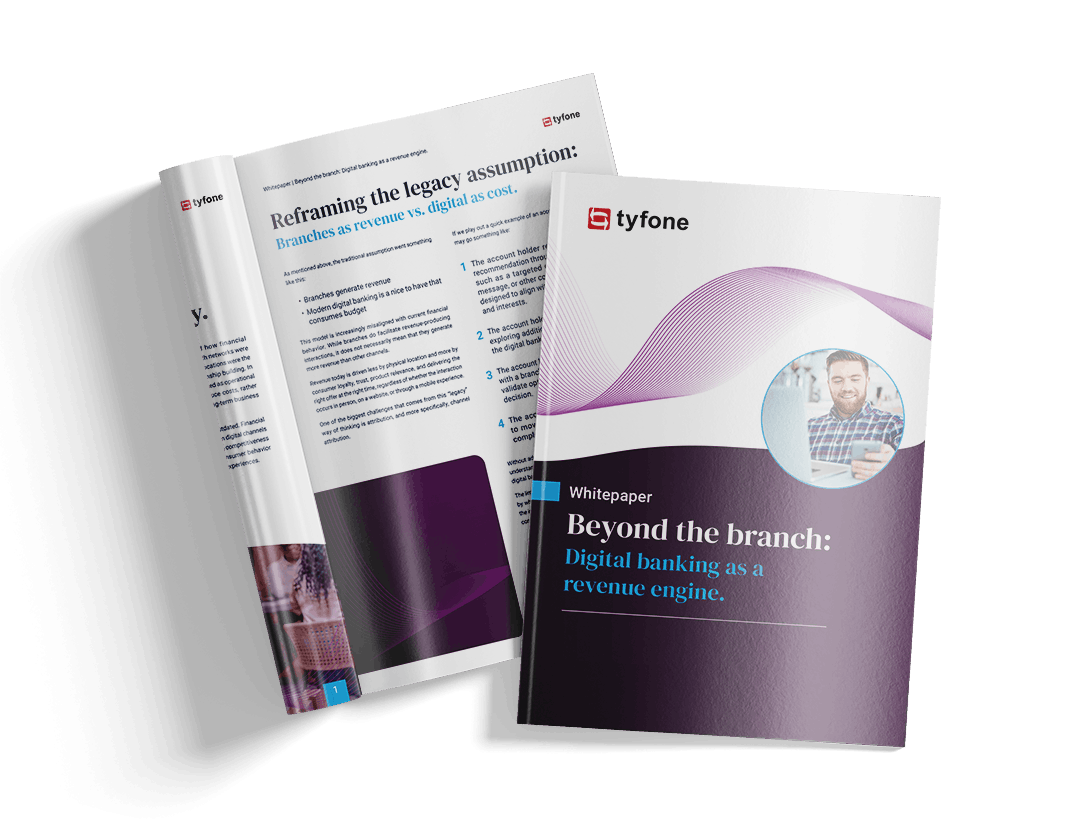
FREE WHITEPAPER
Beyond the branch: Digital banking as a revenue engine.
For decades, financial institutions have treated digital banking as a cost center while branches were seen as the primary drivers of revenue. But with consumer behavior shifting toward digital-first interactions, this traditional mindset is no longer enough.
Read our exclusive whitepaper and explore how modern digital banking platforms can become strategic engines for growth, engagement, and measurable revenue.