INDUSTRY NEWS
NCUA opens 2026 with proposal to reimburse dependent care costs for credit union volunteers.
The rule would give federal credit unions discretion to cover childcare and eldercare expenses, a move aimed at widening the pool of board members and easing the burden on unpaid officials.
The National Credit Union Administration convened its first board meeting of 2026 on Thursday with a proposal that would quietly but significantly alter the economics of volunteer service at the nation’s federal credit unions.
The agency’s board received a briefing on a proposed rule that would allow federal credit unions to reimburse reasonable dependent care expenses incurred by volunteer officials while attending board meetings or carrying out official duties. The change is intended to reduce barriers to service for board members who juggle caregiving responsibilities alongside their volunteer roles.
The briefing was delivered by Keisha Brooks, an attorney-advisor in the NCUA’s Office of General Counsel, who outlined how the proposal would amend the agency’s regulations to recognize dependent care as a reimbursable expense. Under current rules, such costs are not considered reasonable expenses.
That framework has remained largely unchanged for decades, even as childcare and eldercare costs have risen sharply over the past 30 years. The result, regulators and industry observers say, has been a growing mismatch between expectations placed on credit union board members and the practical realities of serving without pay.
The proposed rule would permit — but not require — federal credit union boards to adopt policies allowing reimbursement for dependent care expenses tied directly to official duties. Any payments would need to be reasonable, documented and appropriate given a credit union’s financial condition.
Story continued below…
FREE PAMPHLET
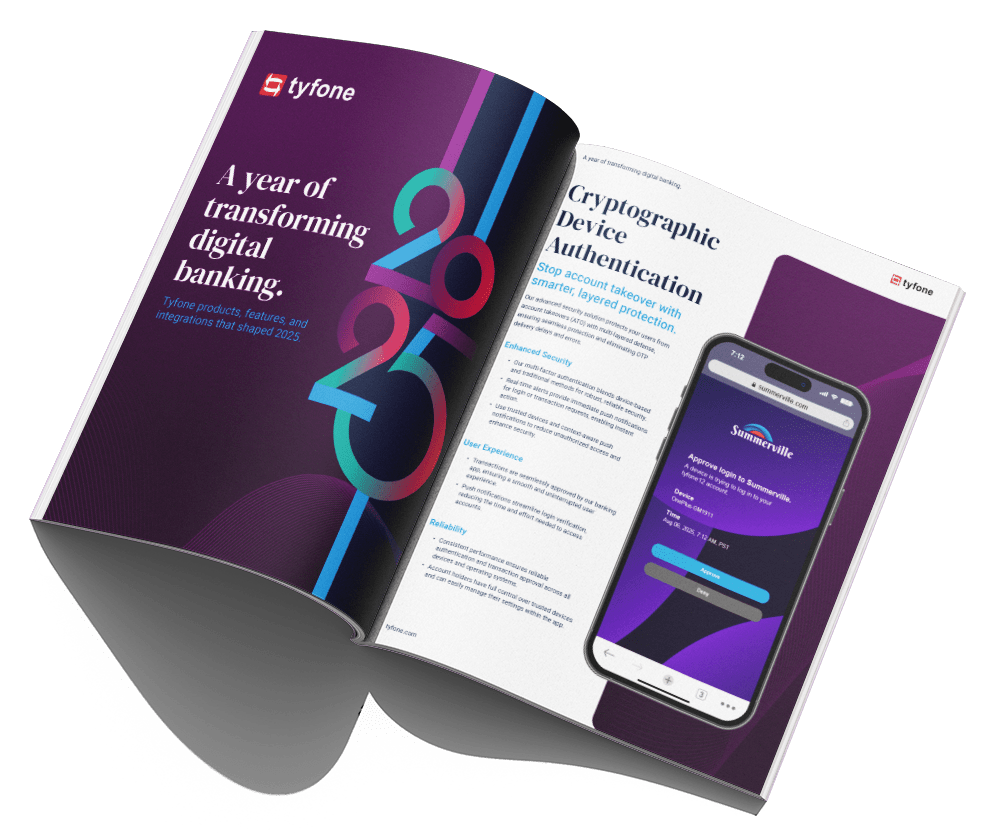
A year of transforming digital banking.
2025 was a milestone year for Tyfone’s digital banking platform. With major product launches, expanded integrations and strategic partnerships, we introduced updates that make banking easier and more seamless.
Download our pamphlet to explore the breakthroughs that shaped the year and set the stage for what’s coming next.
The change would apply only to federally chartered credit unions, including corporate federal credit unions. Federally insured, state-chartered credit unions would remain subject to state law and would not be covered by the proposal.
Kyle Hauptman, chairman of the NCUA, said the rule could benefit roughly 20,000 federal credit union board members nationwide, particularly single parents, caregivers and members of the so-called “sandwich generation” who care for both children and aging relatives.
Unlike many corporate or nonprofit boards, credit union boards are required to meet monthly — 12 times a year — a schedule that can make service especially demanding.
“That’s a meaningful time commitment, especially during working hours,” Hauptman said, noting that the obligation can exceed that of other volunteer roles. “This change reduces barriers to volunteer service, while preserving flexibility for credit unions.”
He emphasized that credit unions, unlike banks, rely heavily on unpaid volunteer officials who contribute their time and expertise without compensation. The proposal, he said, is designed to support that model rather than replace it.
Industry reaction has been largely positive. Mark Treichel, a former executive director of the NCUA who now leads Credit Union Exam Solutions, said in a LinkedIn post that the proposal addresses a real obstacle to board participation.
“Childcare and eldercare costs can be barriers to serving on a board — especially for working professionals, single parents, and caregivers,” Treichel wrote, adding that expectations for board engagement, training and oversight continue to rise.
He noted that the proposal includes several guardrails: it applies only to federal credit unions, covers dependent care rather than lost wages or compensation, requires a written board policy and reasonable internal controls, and remains subject to existing Internal Revenue Service tax treatment.
The NCUA is also seeking public comment on the proposal, including whether activities such as training and conferences should be clearly defined as “official duties” eligible for reimbursement.
Treichel added, “I think this is a positive step for the federal credit union charter.”
If adopted, the rule would mark a modest but notable shift in how regulators view the costs of volunteer governance — acknowledging that service, while unpaid, is not cost-free.
“This won’t fix board recruitment challenges by itself, but it removes a real friction point for people who want to serve and simply can’t absorb the added costs.”
– Mark Treichel
Founder
Credit Union Exam Solutions