
For new CEOs, the first 180 days matter more than you think.

For too long, credit unions have underestimated their potential — and underestimated the importance of leadership transitions.
In a time of historic disruption — where traditional banks are retrenching, fintech’s and big tech are redefining member expectations, and competition for leadership talent is the most intense of my career — the first months of leadership matter far more than most CEOs and boards realize. Not just the first 90 days.
The first 180.
I’ve lived this from every angle: rising through the ranks, serving as CEO during periods of rapid growth and economic stress, and now advising leaders across the country. One truth keeps repeating itself: leadership transitions either create momentum—or quietly erode it.
The early days are not about comfort. They’re about learning fast, setting direction, and establishing discipline.
New leaders who succeed do a few things early and deliberately. They listen—but they don’t drift. They communicate relentlessly. They define what matters, what will be measured, and what will no longer be tolerated. They look hard at their leadership team, not just at resumes, but at decision-making, urgency, and alignment.
At Bethpage Federal Credit Union, we set an aggressive goal early on: double the organization every five years. That wasn’t a branding exercise. It was a strategic necessity. In cooperatives, without stock, growth becomes the discipline. It creates urgency. It forces focus. It exposes weakness quickly.
But growth doesn’t happen by accident. It requires early clarity.
I remember missing a growth target early in my tenure. We didn’t explain it away. We stopped everything. I brought the entire management team together and said, “Nothing else matters until we fix this.” That moment reset expectations. We never missed another strategic target again.
The first 180 days are when leaders establish credibility by producing early wins—not cosmetic ones, but real signals: decisions made faster, priorities narrowed, accountability clarified. Staff don’t need all the answers early. They need to know the leader is paying attention, learning quickly, and willing to act.
Story continued below…
FREE PAMPHLET
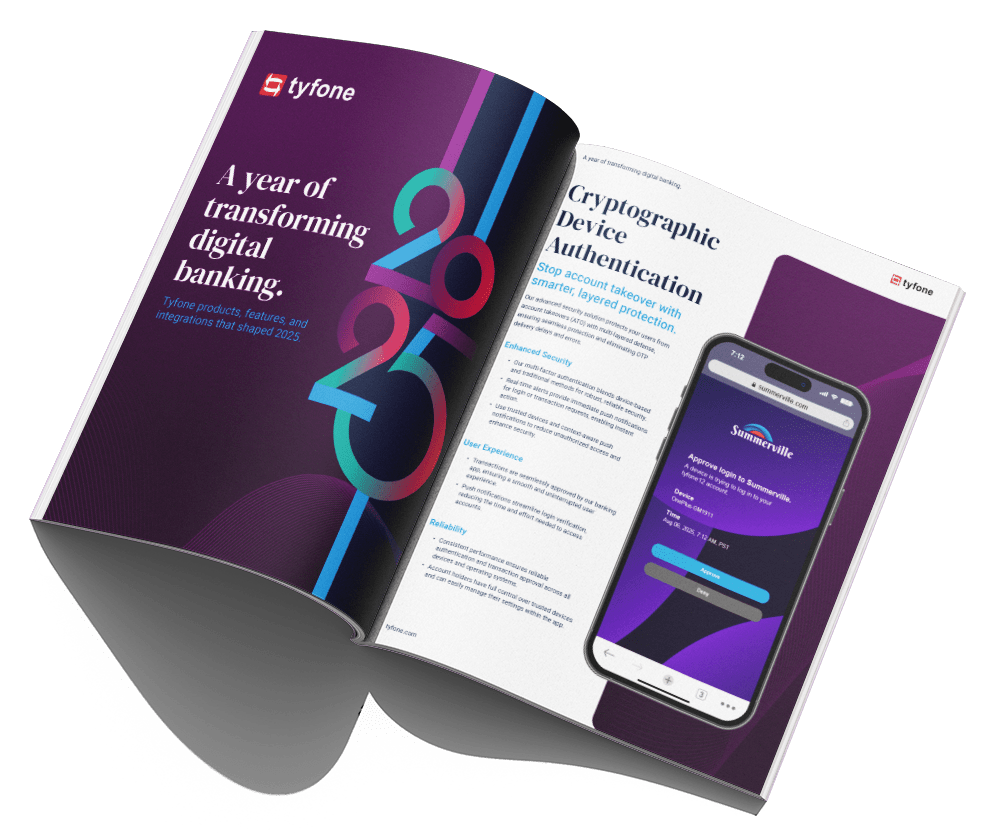
A year of transforming digital banking.
2025 was a milestone year for Tyfone’s digital banking platform. With major product launches, expanded integrations and strategic partnerships, we introduced updates that make banking easier and more seamless.
Download our pamphlet to explore the breakthroughs that shaped the year and set the stage for what’s coming next.
This period is also when communication matters most. Leaders who succeed talk early and often—to staff, to boards, and to key partners. Silence creates anxiety. Clarity creates confidence. Even saying “I don’t know yet, but here’s how we’ll figure it out” builds trust.
Too many CEOs delay hard conversations about succession, retention, and leadership continuity because they feel premature.
They’re not.
In today’s environment — marked by retirements, growth, and relentless recruiting pressure — those risks surface immediately.
That’s why executive compensation and SERPs belong on the early leadership agenda. Not as products. As strategy. In cooperatives, SERPs are the closest thing we have to ownership. They reward long-term stewardship, create financial stability for leaders and their families, and allow executives to focus on building institutions — not chasing the next offer. When done well, they reinforce continuity, accountability, and performance over time.
Boards matter here, too. Volunteer directors don’t need to become operators, but they do need alignment early. The first 180 days are when CEOs and boards must agree on strategy, growth expectations, leadership risk, and the role compensation plays in sustaining success. When that alignment happens early, decisions accelerate.
When it doesn’t, even strong organizations stall.
I believe credit unions can reach 20% market share. I’ve seen what disciplined growth, expense control, and leadership alignment can achieve. But optimism alone won’t get us there.
The credit union model—cooperative, purpose-driven, member-first—can outcompete any bank, any fintech, any platform. But only if leaders use their early days intentionally: learning faster than their peers, communicating more clearly, and aligning every function to performance.
The first 180 days aren’t a grace period.
They’re a window.
What leaders do with them determines everything that follows.
Before joining PARC Street Partners, Kirk Kordeleski was a partner at OM FinancialGroup for four years. Prior to that, he was CEO of $13.5 billion-asset Bethpage FCU in New York for 15 years.
Disclaimer
The views, opinions, and perspectives expressed in articles and other content published on this website are those of the respective authors and do NOT necessarily reflect the views or official policies of Tyfone and affiliates. While we strive to provide a platform for open dialogue and a range of perspectives, we do NOT endorse or subscribe to any specific viewpoints presented by individual contributors. Readers are encouraged to consider these viewpoints as personal opinions and conduct their own research when forming conclusions. We welcome a rich exchange of ideas and invite op-ed contributions that foster thoughtful discussion.