
The branch isn’t dead. It’s being rewritten, and credit unions should pay attention.

For more than a decade, the banking industry has confidently predicted the demise of the branch. Smartphones would replace tellers. Mobile deposit would eliminate visits. Digital banking would make physical locations obsolete. We were told the branch was a relic of the past. Yet something interesting is happening.
Branches aren’t disappearing. In many cases, they are quietly returning, just not in the form we remember. And for credit unions in particular, this moment represents both a warning and an opportunity. The early wave of branch closures was driven by obvious forces. Mobile banking adoption exploded. Routine transactions moved online. Consumers stopped visiting locations for everyday transactions, to transfer funds, or pay bills. For many institutions, branches became expensive real estate supporting fewer and fewer transactions.
Banks reacted predictably…shrink the network. Between 2012 and 2023, thousands of bank branches across the United States closed. Large national banks, armed with massive digital investments, leaned hard into digital-first strategies. The narrative hardened. The future of banking would live in the app. But reality has proven more complicated.
Consumers did not abandon physical banking entirely. Instead, their expectations changed. They now visit branches less frequently, but when they do, the interaction matters far more. Members aren’t coming in to deposit a check. They’re coming in because they need guidance, reassurance, or a complex financial decision explained by a human being. In other words, the branch has shifted from a transaction hub to a trust hub.
Credit unions were never designed to win the transaction race. Large banks will almost always outspend them in digital infrastructure. But credit unions have historically won on something harder to replicate; relationships. That advantage becomes more valuable in a hybrid banking world.
Recent research across the industry shows a pattern that many executives quietly acknowledge. Institutions that eliminate too many physical locations often see slower deposit growth and weaker brand visibility in their communities. Physical presence still acts as a powerful signal of permanence and trust. A building on the corner is a billboard that never turns off. For credit unions expanding into new markets, this matters enormously.
A digital-only expansion strategy often struggles to gain traction. Consumers rarely switch their primary financial institution based solely on online advertising. But a well-placed branch creates a physical anchor for the brand.
Story continued below…
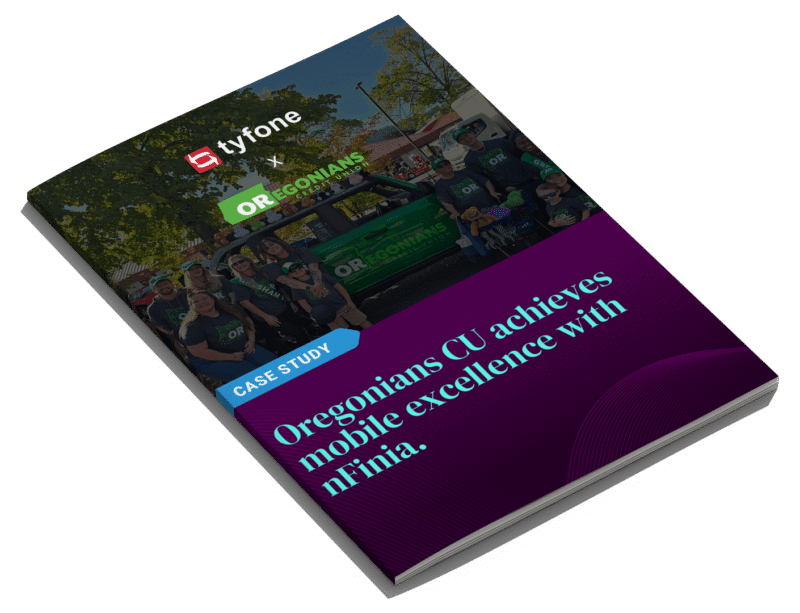
FREE CASE STUDY
Oregonians Credit Union achieved mobile excellence with nFinia.
With nFinia as their platform and empathy as their foundation, Oregonians CU has built a model where innovation and human care work hand in hand. It’s not a choice between high tech and high touch. Done right, you can have both.
Read our exclusive case study and learn how they elevated their digital banking and mobile experience.
This is one reason why many credit unions that closed branches earlier in the decade are now reconsidering their footprint. Not necessarily with large traditional locations, but with smaller, smarter formats. Instead of rows of teller windows, you see open consultation areas. Video banking kiosks. Interactive screens. Financial education workshops. Staff who function less like tellers and more like advisors or problem-solvers.
Many locations now operate with only a handful of employees but deliver deeper engagement with each visitor. Technology handles routine transactions, while people focus on relationships.
Credit unions are uniquely positioned to thrive in this model because the format aligns with their cooperative purpose. A branch can function not just as a place to bank, but as a community node—hosting workshops, meeting local employers, partnering with universities, or helping members navigate complex financial moments.
In this sense, the branch becomes less about square footage and more about presence.
However, the industry must be careful not to misinterpret the trend. Branches are not “coming back” in the sense of returning to the past. The days of large networks built around daily transactions are gone. What is emerging instead is a hybrid strategy. Digital platforms handle the everyday. Physical spaces handle the meaningful.
The institutions that succeed will be those that design their networks intentionally rather than reactively. That means asking different questions: Where does physical presence actually strengthen trust? Which communities benefit from a visible cooperative partner? And how can branches complement digital tools rather than compete with them? Credit unions must view the branch conversation through the lens of mission.
Banks close branches primarily to reduce cost. Credit unions must also consider community access. In many rural or underserved areas, when a bank branch disappears, the credit union may become the last local financial institution standing. That role carries both responsibility and opportunity.
The institutions that embrace this moment will not build branches simply to process transactions. They will build them to build relationships. And in a financial system increasingly dominated by algorithms and apps, that may prove to be one of the most valuable differentiators credit unions have left.
Michael Murdoch is the AVP of Marketing for $1.2 billion-asset University Credit Union in Los Angeles. Prior to that, he was Director of Marketing and Branding for CUCollaborate.
Disclaimer
The views, opinions, and perspectives expressed in articles and other content published on this website are those of the respective authors and do NOT necessarily reflect the views or official policies of Tyfone and affiliates. While we strive to provide a platform for open dialogue and a range of perspectives, we do NOT endorse or subscribe to any specific viewpoints presented by individual contributors. Readers are encouraged to consider these viewpoints as personal opinions and conduct their own research when forming conclusions. We welcome a rich exchange of ideas and invite op-ed contributions that foster thoughtful discussion.