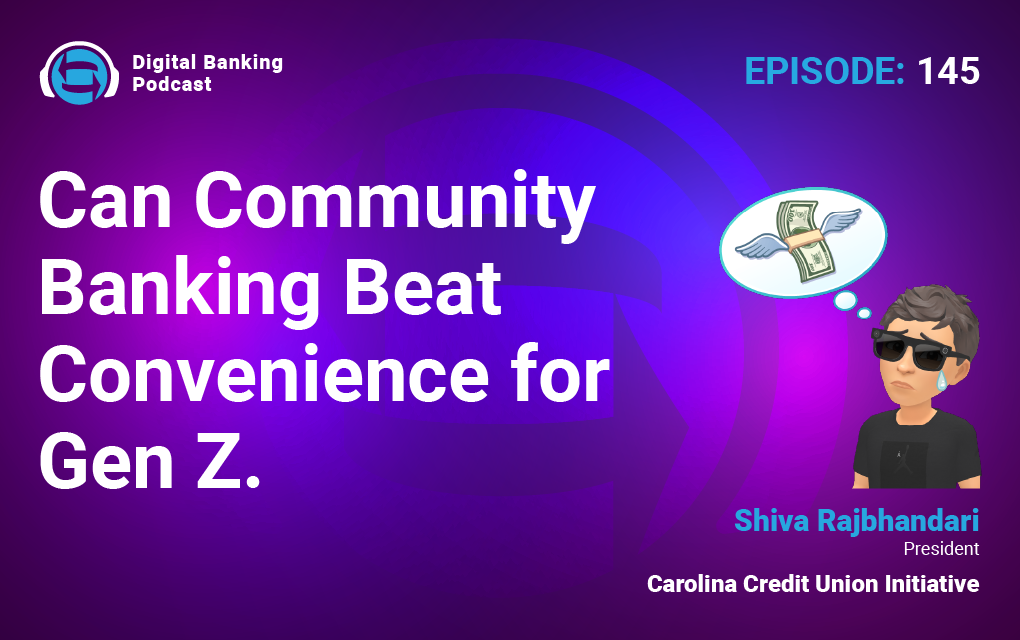
Can Community Banking Beat Convenience for Gen Z, with Shiva Rajbhandari.
“Different communities have different financial needs.”
EPISODE:
145
with guest:

Shiva Rajbhandari
President
Carolina Credit Union Initiative
Episode Summary
In the latest episode of the Digital Banking Podcast, host Josh DeTar of Tyfone welcomed Shiva Rajbhandari, President at Carolina Credit Union Initiative. The episode centered around the case for a student-run credit union at UNC Chapel Hill and what that effort revealed about access, trust, and community banking.
Shiva traced the idea back to a simple problem. He arrived on campus with a scholarship check, but he had no local credit union option that served students. That gap pushed him to study how student-run credit unions worked, what new charters required, and why the process had grown so hard. He explained that today’s barriers included startup capital, regulation, digital infrastructure, and the need to compete with large banks and fintech apps.
From there, the conversation turned to what students actually needed. Shiva argued that financial institutions missed the mark when they treated every member the same. He pointed to issues like student group accounts, rent reporting, and credit building. He also made a clear case for human service. Good tech mattered, but trust still grew fastest when people could reach someone who knew their community.
Key Insights
⚡ Generic banking misses local needs
A lot of banking teams still design products as if every member wants the same thing. That view breaks down fast in a real community. College students, for example, face needs that large institutions often miss. They may need low-friction accounts for student groups, credit-building tools tied to rent, and help managing money for the first time. A generic checking account does not solve those problems on its own. Community institutions have an opening here, but only if they study the daily lives of the people they serve. That means looking past broad demographics and finding the real pain points. It also means building products around moments that matter, not around what is easiest to scale. The lesson is simple. Relevance comes from specificity. If an institution understands a narrow group well, it can deliver services that feel useful, fair, and hard to replace.
⚡ Human support still shapes trust
Digital banking needs strong tools, but strong tools do not replace human trust. People may like speed and convenience most of the time, yet the relationship changes the moment something feels unusual or risky. That is when a fast answer from a real person matters most. A member with a large check, a blocked transaction, or a confusing loan issue wants context, judgment, and reassurance. A chatbot may help with basic tasks, but it rarely builds confidence in a stressful moment. That is why institutions should stop treating people and technology as opposing choices. Members want both. They want solid digital access for routine tasks and easy human support when the situation gets personal. The strongest strategy blends the two. Good technology lowers friction. Good service deepens trust. Institutions that connect those two pieces will stand out in a market full of lookalike options.
⚡ New charters need more than good intentions
Starting a new credit union takes far more than a mission statement. It takes capital, compliance knowledge, digital infrastructure, and a clear plan for serving a specific field of membership. That reality helps explain why new charters remain rare. Still, the challenge is not a reason to stop. It is a reason to build better support around new efforts. The industry needs practical playbooks, early mentorship, startup funding paths, and modern operating models that fit small institutions. It also needs to treat community ties as a real asset, not a soft benefit. A deeply connected institution can keep costs low, earn trust faster, and spot unmet needs before larger competitors do. If credit unions want to grow the movement, they need to make room for new entrants. That means backing new charters with the same seriousness they bring to mergers, innovation, and long-term relevance.
About The Guest

He leads the effort to charter a student-run credit union at UNC Chapel Hill, aimed at giving students community-focused banking, credit-building tools, and stronger local access.