
Rising costs test home and auto buyers, but Atlanta CU sees steady demand.
Delta Community’s CEO says borrowers remain active despite elevated prices and economic uncertainty, underscoring the importance of financial readiness.
As spring ushers in one of the busiest seasons for home and automobile purchases, rising interest rates and elevated prices continue to challenge American consumers. Yet demand remains resilient, according to the chief executive of Delta Community Credit Union, one of the nation’s largest credit unions.
Hank Halter, the institution’s chief executive, said borrowing activity has held steady even as households grapple with higher costs. In an interview Wednesday with WXIA-TV, he emphasized that consumers remain engaged in the housing and auto markets, particularly in metro Atlanta.
“Borrowers are pretty steady,” Halter said. “That’s what our business is seeing. Rates are higher than they were during what we saw in the pandemic, 3 or 4 or 5 years ago, but they have come down from some of the recent highs.”
He added that activity spans multiple lending products. “We’re seeing all kinds of activity, new home purchases, refinances, home equity lines,” he said. “So I think people are busy, and I think Metro Atlanta is still a very strong market, particularly when you look across the country.”
Delta Community Credit Union, headquartered in Atlanta, reported nearly $9 billion in assets and 529,000 members. The credit union earned $70.6 million in 2025, up from $38 million in 2024, according to call report data from the National Credit Union Administration.
Story continued below…
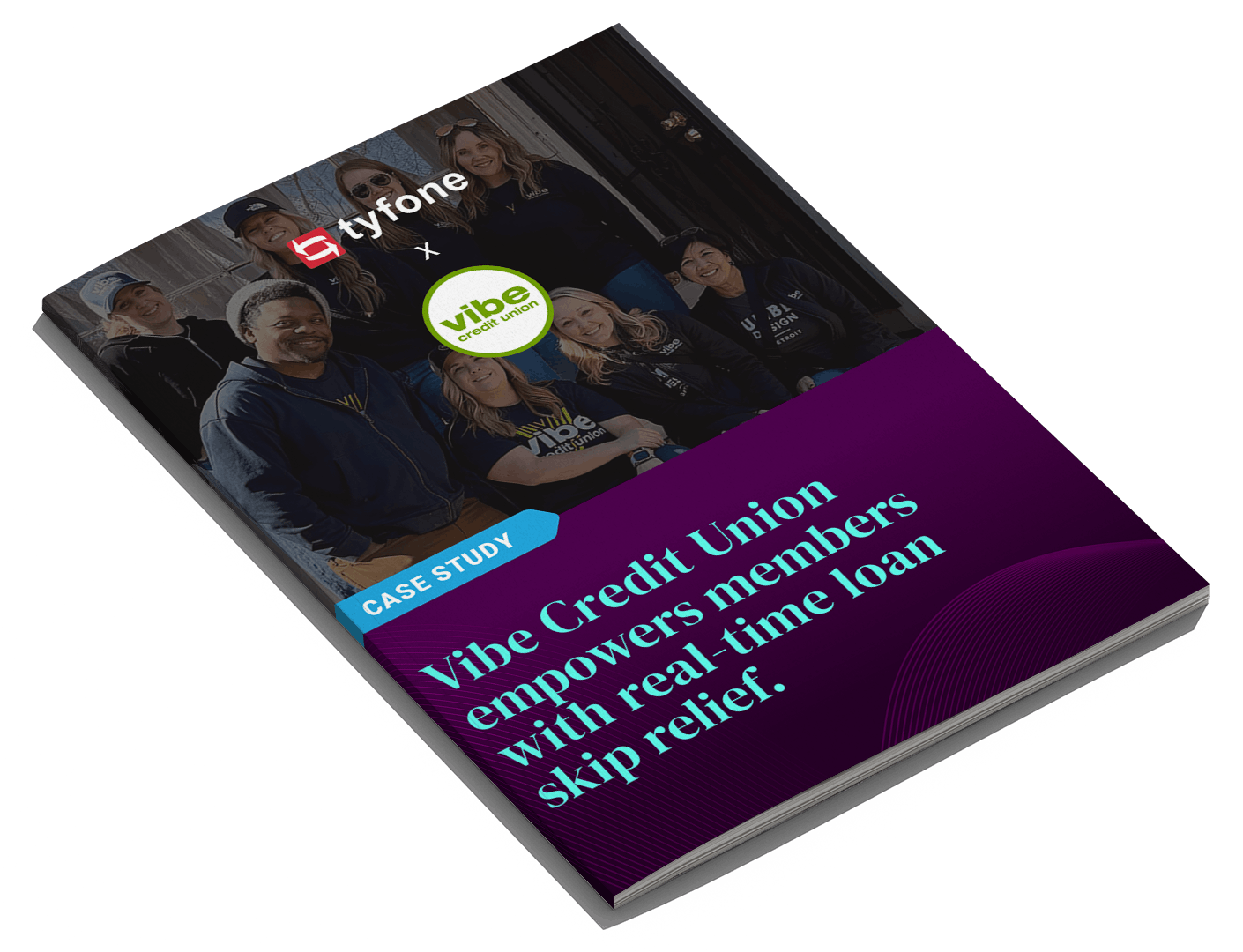
FREE CASE STUDY
Vibe Credit Union empowers members with real-time loan skip relief.
To meet growing demand for faster, more convenient digital options, Vibe partnered with Tyfone to implement a Skip-A-Pay solution. Members can skip eligible loans online, while staff can assist those who prefer to call or visit branches using the same system. The result is a self-service loan skip program that supports members year-round, improves internal efficiency, and has generated over $100,000 in annual revenue without impacting credit scores.
Read our exclusive case study and learn how they elevated their digital banking and loan servicing experience.
Mortgage rates currently hover in the low 6% range, Halter said, a level that is prompting some potential buyers to weigh whether to act now or wait.
“You can do that, and you might be lucky, it might work to your advantage,” he said. “But I think what the guidance I usually give to consumers is, do your homework, know your financial readiness, and when you have all that together, move forward, because you’re gonna miss out on certain opportunities, if you do wait too long.”
For first-time homebuyers, the affordability challenge remains acute. Halter urged consumers to take a comprehensive view of homeownership costs.
“Again, that financial readiness, do your homework, understand what you can afford, make sure you have a budget, and where the home fits in the budget,” he said. “But be optimistic and realistic about what you can afford.”
Beyond mortgage payments, he encouraged buyers to consider ongoing expenses such as maintenance, insurance and property taxes. “You need to work that into the equation, as well,” he said.
Automobile purchases present a similarly complex equation. Although prices remain high, Halter noted that improved vehicle inventories have shifted the market in favor of consumers.
“There are cars available in the inventory, both new and used cars,” he said. “Now, prices are up, but I think on the automobile, that works to the consumers’ advantage.”
Unlike the pandemic-era shortages that forced quick decisions, today’s buyers have time to compare options. “Now there’s a little bit of a buyer’s market,” Halter said. “The inventories are up. You have time to do your homework, and that’s really important.”
He advised shoppers to understand dealer pricing, review their credit scores and secure financing before visiting a dealership. “You even go to your bank or credit union, like Delta Community, and get pre-approved,” he said. “When you go into the dealer, and you’ve got that pre-approved financing, it shows the dealer you’re ready to go.”
Still, Halter cautioned against extended auto loans, which can stretch six to eight years. While such loans lower monthly payments, they often increase overall borrowing costs.
“You will get a lower monthly payment, but you’re going to pay a lot more in interest over the life of that loan,” he said. “For the most part, they’re tricky and they’re dangerous.”
The broader economic landscape, shaped by fluctuating energy prices and market uncertainty, has left some consumers hesitant to make large purchases. Halter said preparation remains the most reliable strategy.
“The time is always right to know what you can afford,” he said. “Do your homework. I call it financial readiness.”
He encouraged borrowers to account for all costs associated with ownership, from insurance to taxes, and to explore seasonal promotions from financial institutions. “Springtime’s a really good time to consider,” he said.
Despite economic headwinds, Halter’s outlook reflects cautious optimism, grounded in the belief that informed consumers can navigate uncertainty with confidence.
“Understand where your budget is, and then work backwards from that. Know your total budget, then figure out, what can I afford for a car or a home?”
– Hank Halter
CEO
Delta Community Credit Union
Ken McCarthy is manager of marketing communications at Tyfone, where he monitors the credit union industry and contributes to conversations shaping its future. He previously covered credit unions and community banking for American Banker and S&P Global Market Intelligence. He holds a journalism degree from Point Park University and has more than 15 years of experience covering financial services. He is also the author of three literary fiction novels.