
INDUSTRY NEWS
Credit union-buying-bank deals slow, but rebound seems possible.
Only four acquisitions have been announced in the first half of 2026, though advisers say a stronger second half may be on the horizon as more community banks seek buyers.
The pace of credit union acquisitions of banks has slowed sharply in 2026, with just four deals announced through the first six months of the year. Even so, industry advisers say the slowdown is unlikely to last as a growing number of community banks look for acquisition partners.
In fact, one deal advisor told Tyfone the next deal could be announced any day now.
The transactions announced so far this year include Zeal Credit Union‘s planned acquisition of Miners State Bank in Michigan, a $144 million institution; Alabama ONE‘s purchase of Peoples Independent Bank, a $476 million Alabama bank; Landmark Credit Union‘s agreement to acquire American National Bank–Fox Cities in Wisconsin, with $419 million in assets; and Interra Credit Union‘s planned acquisition of The Hicksville Bank in Ohio, which has $217 million in assets.
The most recent of those – the Interra deal – has sparked serious outrage from the state’s bankers.
The slower pace follows two unusually active years. Sixteen credit union-bank acquisitions were announced in 2025, according to S&P Global Market Intelligence, down modestly from a record 22 deals in 2024 but still well above historical norms. Credit unions have increasingly pursued bank acquisitions as a way to expand market share, diversify lending portfolios and add deposits.
Glenn Christensen, president and chief executive of CEO Advisory Group, said he expects activity to accelerate before year-end.
“I believe we will see an uptick in bank acquisition announcements during the second half of the year,” Christensen told Tyfone. “We have a number of deals in the pipeline, and there are numerous opportunities for credit unions to acquire banks.”
Christensen said credit unions have remained disciplined despite the abundance of opportunities. Unlike mergers between credit unions, which often focus on combining resources for members, bank acquisitions require a more rigorous review of financial performance, demographics, regulatory considerations and cultural fit.
Story continued below…
FREE PAMPHLET
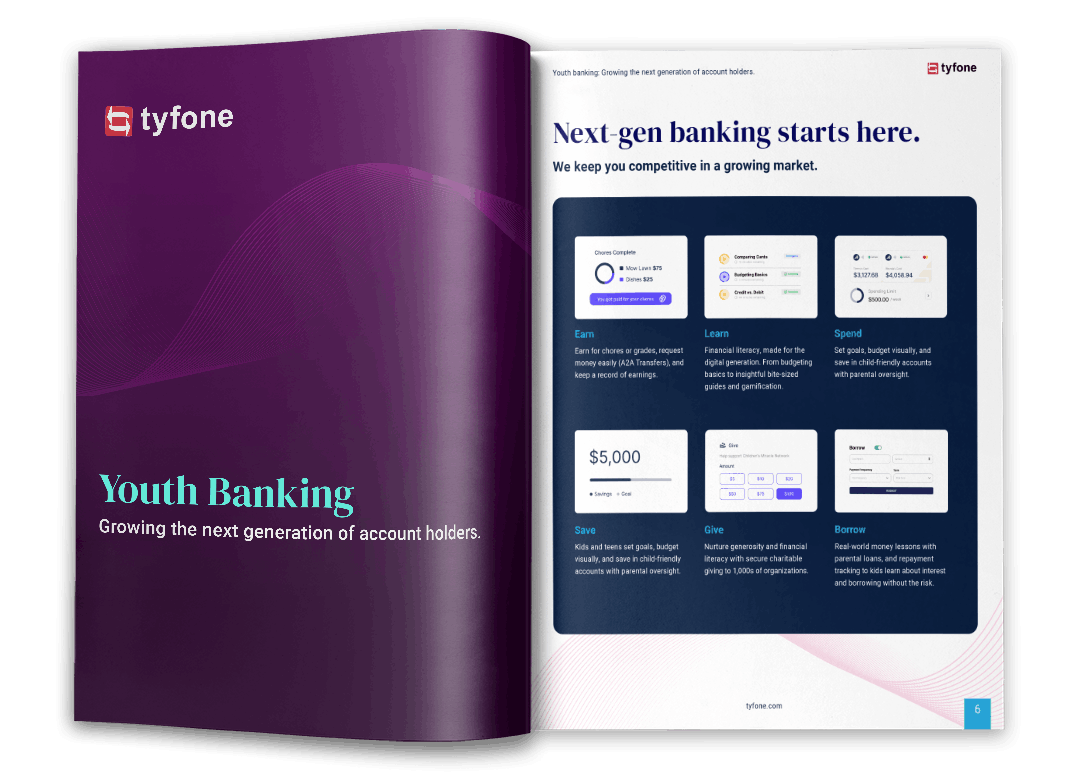
Youth banking: Growing the next generation of account holders.
Financial habits are formed early, but most financial tools are designed for adults. As a result, families often rely on cash, shared cards, or disconnected apps to teach money management, making it difficult to balance independence with oversight.
At the same time, younger generations expect intuitive digital experiences, creating a gap between how they interact with money and how financial services are delivered. Financial institutions need age-appropriate solutions that engage younger account holders while supporting parents and caregivers.
“While there is no shortage of bank acquisition opportunities, not every opportunity is the right fit,” Christensen said. “The good news for well-capitalized, mid-sized credit unions is that many small banks are actively seeking buyers and could represent attractive opportunities for institutions looking to accelerate growth.”
Not everyone views the trend favorably.
The Independent Community Bankers of America has long opposed credit union purchases of tax-paying banks, arguing that some of the nation’s largest credit unions have expanded beyond their original mission while continuing to benefit from their federal tax exemption.
Michael Emancipator, the association’s senior vice president and regulatory counsel, said it is too early to determine why deal activity has slowed this year but suggested increased public scrutiny may be playing a role.
“It’s premature to draw conclusions about what’s driving the sharp decline in announced bank acquisitions by credit unions compared with the record pace just two years ago,” Emancipator told Tyfone. “However, we believe the sustained efforts of ICBA, our state association partners, and community bankers — including awareness campaigns like the Illusionists, grassroots advocacy that has yielded important state policy changes, and ongoing discussions with policymakers — has highlighted what’s truly at stake for consumers and taxpayers.”
He added that growing attention to what ICBA sees as “the disconnect between the tax-exempt status enjoyed by large credit unions and their increasingly aggressive expansion through bank acquisitions has led to greater scrutiny of these transactions, ultimately benefiting consumers and local communities.”
Brad Bolton, President and CEO of $225 million-asset Community Spirit Bank in Red Bay, Alabama, summed it up like this.
“The fight is not over and it is up to community banks to continue educating policymakers of the importance of holding hearings on if the need for their tax structure continues to be justified,” he told Tyfone. “But I believe ICBA and state affiliated banking associations push to limit these deals in certain states and bring the unfair advantages credit unions have has certainly had an effect on this welcomed slowdown.”
Whether the first-half slowdown represents a temporary pause or a broader shift remains uncertain. For now, advisers continue to point to a healthy pipeline of potential sellers, particularly among smaller community banks, suggesting the second half of 2026 could bring renewed momentum to one of the financial industry’s most closely watched consolidation trends.
“We have a number of deals in the pipeline, and there are numerous opportunities for credit unions to acquire banks.”
– Glenn Christensen
President & CEO
CEO Advisory Group
Ken McCarthy is manager of marketing communications at Tyfone, where he monitors the credit union industry and contributes to conversations shaping its future. He previously covered credit unions and community banking for American Banker and S&P Global Market Intelligence. He holds a journalism degree from Point Park University and has more than 15 years of experience covering financial services. He is also the author of three literary fiction novels.