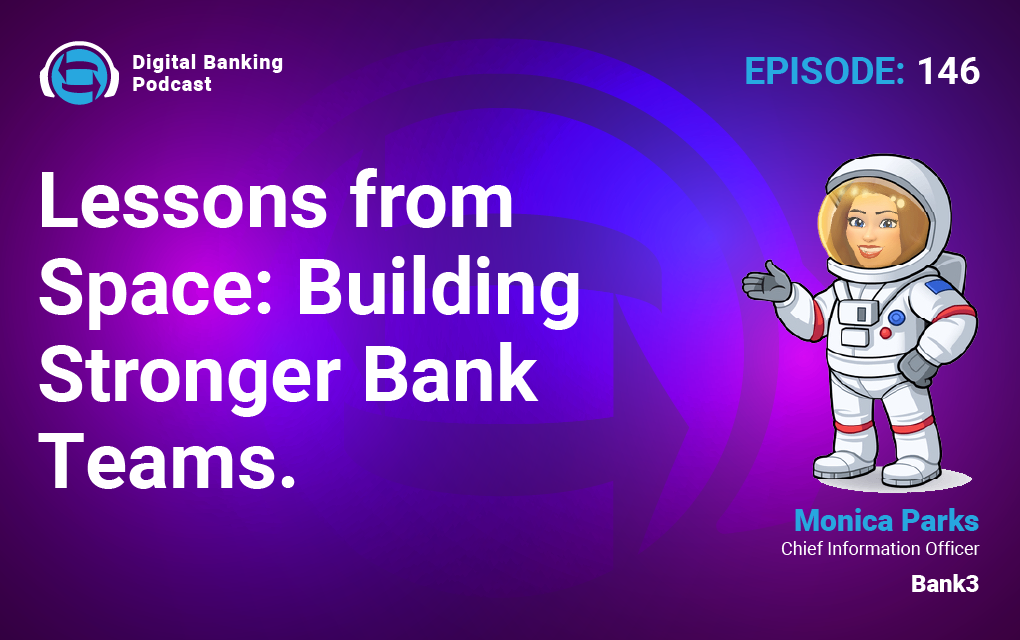
Lessons from Space: Building Stronger Bank Teams with Monica Parks.
“You have to listen to your people. You have to really listen to them. And if you’re not in those spaces that condone those environments, then change the conversation.”
EPISODE:
146
with guest:

Monica Parks
Chief Information Officer
Bank3
Episode Summary
In the latest episode of Digital Banking Podcast, host Josh DeTar welcomed Monica Parks, Chief Information Officer at Bank3. The episode centered around the importance of keeping the human element at the heart of banking and technology, drawing lessons from Monica’s unique experience as an analog astronaut.
Monica shared how her time in space simulations taught her the power of empathy, focus, and honest communication—traits she brought back to lead her banking teams. She described how strict routines and clear processes, vital for mission success in isolation, also help banking teams perform under pressure. Monica stressed that even in highly technical roles, staying connected with people matters most. She encouraged leaders to step out of their silos, listen to staff and customers, and create room for unscripted, authentic conversations.
Throughout the discussion, Monica and Josh explored why process, direct feedback, and crew mentality drive both space missions and successful banking operations. Monica’s practical approach showed how small shifts—like prioritizing mental well-being and open dialogue—can help teams deliver better results and build stronger connections in community financial institutions.
Key Insights
⚡ Human Element Drives Lasting Results
Focusing on technology or deadlines alone can cause teams to lose sight of what matters most—the people involved. Teams that keep the human element front and center build stronger connections, foster trust, and deliver better results. Simple habits like checking in on colleagues, listening actively, and making space for authentic conversations can defuse stress and spark new ideas. When leaders prioritize empathy and recognize that every action impacts others, both morale and performance improve. This approach translates to any workplace, especially in banking and technology, where the stakes are high and the pressure is real. By making the human element a fixed point in daily routines and decision-making, teams become more resilient, adaptable, and successful over the long run.
⚡ Process and Preparation Shape Team Success
Well-defined processes and preparation create environments where teams can perform under pressure. Borrowing from space mission protocols, breaking large goals into structured steps helps teams manage stress, adapt quickly, and avoid costly errors. Simple reminders—like building in breaks and encouraging real downtime—protect mental clarity and keep the group on track. Clear roles, open communication, and checklists make complex projects run smoother, whether in a high-stakes mission or a digital banking rollout. Preparation doesn’t mean rigidity; it means setting up guardrails that let people focus on the task at hand and respond flexibly as challenges arise. Teams that invest in process aren’t just more efficient—they’re better equipped to deliver consistent, high-quality results.
⚡ Honest Conversations Build Healthier Workplaces
Direct, honest communication clears obstacles and builds trust. Teams thrive when people feel safe to say what needs to be said—even when it’s awkward or uncomfortable. Open dialogue isn’t about being rude or blunt for its own sake; it’s about creating an environment where problems get solved quickly and everyone can contribute ideas without fear. Leaders who encourage straightforward feedback and model respectful candor help their teams move past ego, insecurity, and misunderstanding. This approach also helps surface blind spots, prevent small issues from growing, and keep projects moving forward. Over time, a culture of honest conversation leads to stronger relationships, higher accountability, and a workplace where people feel heard and valued.
About The Guest

Known for blending IT leadership with a people-first approach, Monica applies lessons from analog astronaut training to promote communication, process, and empathy in banking teams.