
Credit unions’ biggest players show diverging results.
State Employees nears $60 billion in assets as Boeing Employees’ earnings decline, underscoring a mixed picture for the industry.
Two of the nation’s largest credit unions continued to grow their memberships and assets in the second quarter, but their financial results moved in different directions, according to early data from the National Credit Union Administration.
State Employees Credit Union, based in Raleigh, N.C., and the country’s second-largest credit union, came within striking distance of two major milestones at the end of June: $60 billion in assets and 3 million members. Boeing Employees Credit Union, the fourth-largest, also expanded its balance sheet and membership, though its earnings declined from a year earlier.
Boeing Employees operates as BECU.
State Employees ended the quarter with $59.97 billion in assets, up from $56.2 billion a year earlier. Its membership reached nearly 3 million, at 2.998 million, compared with 2.937 million at the end of June 2025.
The credit union also posted stronger earnings. It earned $216.4 million in the first six months of 2026, compared with $181 million during the same period a year earlier.
At its current pace, State Employees is poised to cross both the $60 billion asset threshold and the 3 million-member mark when the next reporting period arrives.
Boeing Employees, headquartered in Tukwila, Wash., also grew, but at a more modest rate. Its assets rose to $29.62 billion from $28.93 billion a year earlier, while membership increased to about 1.59 million from 1.54 million.
Story continued below…
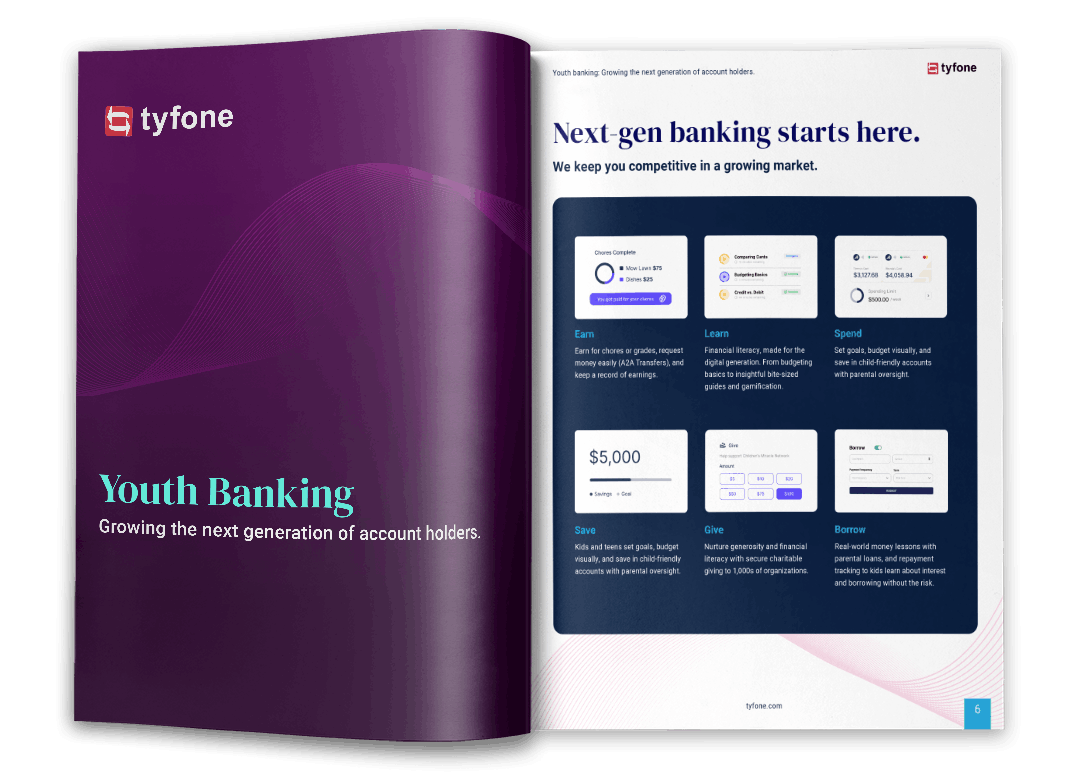
FREE PAMPHLET
Youth banking: Growing the next generation of account holders.
Financial habits are formed early, but most financial tools are designed for adults. As a result, families often rely on cash, shared cards, or disconnected apps to teach money management, making it difficult to balance independence with oversight.
At the same time, younger generations expect intuitive digital experiences, creating a gap between how they interact with money and how financial services are delivered. Financial institutions need age-appropriate solutions that engage younger account holders while supporting parents and caregivers.
Its earnings, however, moved in the opposite direction. Boeing Employees earned $86.1 million during the first half of 2026, down from $97.5 million in the first half of 2025.
The results are among the first glimpses of second-quarter performance from the NCUA, which collects financial data from federally insured credit unions. More figures are expected to emerge in the coming weeks, offering a broader view of how the industry is faring.
Data for the world’s largest credit union, Navy Federal, has not yet been released.
The early results arrive against a backdrop of steady loan growth but also rising delinquencies and continued consolidation.
At the end of the first quarter, the delinquency rate at federally insured credit unions was 0.85 percent, or 85 basis points, according to the NCUA. That was five basis points higher than a year earlier.
Credit unions have continued to expand lending despite the increase in delinquency. Total loans outstanding rose $75.8 billion, or 4.6%, over the year to $1.73 trillion.
Growth was concentrated in several categories, including real estate, commercial and credit card lending. Those gains were partly offset by declines in auto and student loan balances.
The figures suggest that credit unions are still finding opportunities to expand their balance sheets even as some areas of consumer lending soften. The coming quarterly data will show whether the pattern holds across the broader industry.
At the same time, the number of credit unions continues to fall as mergers reshape the sector.
There were 4,250 federally insured credit unions in the first quarter of 2026, down from 4,411 a year earlier. The decline reflects the continuing consolidation of an industry that remains highly fragmented but is increasingly dominated by larger institutions.
Ken McCarthy is manager of marketing communications at Tyfone, where he monitors the credit union industry and contributes to conversations shaping its future. He previously covered credit unions and community banking for American Banker and S&P Global Market Intelligence. He holds a journalism degree from Point Park University and has more than 15 years of experience covering financial services. He is also the author of three literary fiction novels.