
Are credit unions being used as political pawns?

Washington has never been a place free of political hardball.
Industries lobby, coalitions fracture, and lawmakers use leverage to advance their priorities. But there must still be a line between political pressure and responsible policymaking. Credit unions and the members who depend on them should not be punished because Washington stakeholders are angry with one another.
On August 7, the Congressional Record showed the addition of Senators Cynthia Lummis, Bernie Moreno, and Angus King as cosponsors of S. 3623, the Marshall-Durbin interchange bill. The political concern is especially acute with Senators Lummis and Moreno. Contemporaneous reporting connected their decision to frustration with the banking industry’s role in delaying Senate action on the Digital Asset Market Clarity Act and creating problems within the Republican conference. Neither senator has publicly said the cosponsorship was retaliation. Still, the timing, surrounding reporting, and absence of a newly stated payments-policy rationale create a reasonable and troubling appearance that the Marshall-Durbin bill is being used as leverage in an unrelated fight.
Senators are entitled to challenge banks over digital assets, stablecoin rewards, deposits, lending, or any other provision of the CLARITY Act. They are entitled to reject industry arguments and press for a bill they believe is important. What they should not do is use a sweeping payment-routing mandate to send a political message.
The Marshall-Durbin interchange bill would require credit-card issuers with more than $100 billion in assets to enable at least two unaffiliated payment networks, including one other than Visa or Mastercard. Supporters argue that this would increase competition and lower merchant costs. That argument does not deserve to be accepted on faith or transformed into a bargaining chip.
The proposal is not a surgical strike whose effects would stop at the largest banks. Payments are an interconnected ecosystem. Network investment, fraud allocation, card economics, technology standards, rewards, dispute resolution, and consumer expectations extend across institutions of every size. An exemption written into statutory text does not create an economic wall around credit unions. In a January joint letter, DCUC, America’s Credit Unions, and the Independent Community Bankers of America cited Federal Reserve data indicating a 30 percent drop in interchange revenue at community financial institutions after the original Durbin debit mandate despite a statutory exemption.
There is also no guarantee that merchant savings would reach consumers. DCUC’s April 2025 letter to the Senate Banking Committee cited Federal Reserve Bank of Richmond research finding that nearly 99 percent of merchants did not lower prices after debit interchange regulation, while roughly one-fifth raised prices. The Marshall-Durbin bill contains no meaningful requirement that savings be passed to servicemembers, veterans, or families at the checkout counter. Congress should not impose certain costs on credit unions in exchange for speculative consumer benefits.
DCUC has repeatedly explained what interchange supports at member-owned institutions. In our June 2026 comments to the House Financial Services Committee, we detailed how it helps fund fraud prevention, cybersecurity, secure digital banking, card protections, rewards, low- or no-fee products, financial counseling, deployment assistance, and access points serving military installations and surrounding communities. Those costs do not disappear when Congress changes routing rules. They move and consumers can ultimately be asked to absorb them through fewer benefits, higher fees, tighter credit, or reduced services.
Story continued below…
FREE PAMPHLET
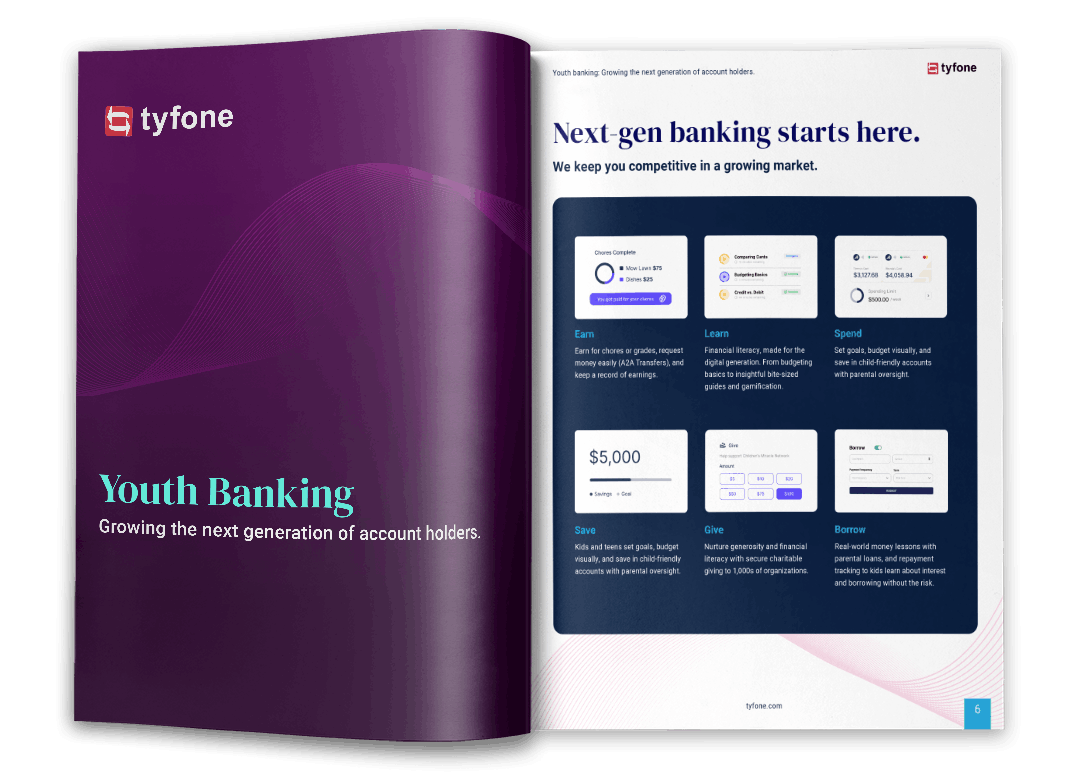
Youth banking: Growing the next generation of account holders.
Financial habits are formed early, but most financial tools are designed for adults. As a result, families often rely on cash, shared cards, or disconnected apps to teach money management, making it difficult to balance independence with oversight.
At the same time, younger generations expect intuitive digital experiences, creating a gap between how they interact with money and how financial services are delivered. Financial institutions need age-appropriate solutions that engage younger account holders while supporting parents and caregivers.
For military families, the stakes are especially serious. Servicemembers relocate frequently, deploy overseas, and rely on payment products that must work securely across state lines and national borders. A compromised card during deployment can disrupt a household’s ability to pay bills, respond to an emergency, or complete a permanent change of station. In a January 2026 joint letter with the Association of Military Banks of America, DCUC warned that merchant-directed routing could prioritize price over proven security and fraud controls, jeopardizing personal financial stability and mission focus.
DCUC’s opposition is neither new nor opportunistic. We have raised these concerns before the Senate Banking Committee, Senate leadership, the Armed Services Committees, the Senate Agriculture Committee, and the House Financial Services Committee. We opposed attaching the Marshall-Durbin bill to the GENIUS Act, digital-asset legislation, and the National Defense Authorization Act because a major rewrite of the payments system should proceed through regular order, not through unrelated legislative vehicles.
DCUC supports a workable digital-asset framework that includes meaningful parity for credit unions and appropriate authority for the organizations that help them serve members. We are prepared to work constructively with Senators Lummis, Moreno, King, and every other lawmaker on CLARITY. But constructive engagement on digital assets cannot require silence when credit unions are placed in the path of a separate political dispute.
If lawmakers believe the Marshall-Durbin interchange bill is sound policy, they should prove it. Hold hearings in the Senate Banking Committee. Examine fraud and cybersecurity implications. Require credible consumer pass-through analysis. Hear directly from credit unions, military-serving institutions, small businesses, networks, and consumers. Then judge the proposal on evidence.
Credit unions should not pay the price for Capitol Hill political retribution. Political frustration is not payments policy. Retaliation is not regular order. And the financial readiness of those who serve our country must never become collateral damage in Washington’s latest dispute.
Jason Stverak is Chief Advocacy Officer for the Defense Credit Union Council, a role he assumed in April 2024. He previously served as Deputy Chief Advocacy Officer for Federal Government Affairs at America’s Credit Unions and was interim chief advocacy officer in 2022 and 2023. Earlier in his career, he was deputy chief of staff to Senator Kevin Cramer and held senior legislative roles in Congress and advocacy organizations. A prominent voice on Capitol Hill, Stverak is a frequent media contributor and has been recognized as a top lobbyist by The Hill and the National Institute for Lobbying and Ethics.
Disclaimer
The views, opinions, and perspectives expressed in articles and other content published on this website are those of the respective authors and do NOT necessarily reflect the views or official policies of Tyfone and affiliates. While we strive to provide a platform for open dialogue and a range of perspectives, we do NOT endorse or subscribe to any specific viewpoints presented by individual contributors. Readers are encouraged to consider these viewpoints as personal opinions and conduct their own research when forming conclusions. We welcome a rich exchange of ideas and invite op-ed contributions that foster thoughtful discussion.