AI should strengthen the credit union difference – not erase it.
Artificial intelligence should make the credit union difference stronger. It should never make the member matter less.

Before anyone shows me another impressive artificial intelligence demonstration, I want to hear about the members who will be better off because of it.
Will it help protect a family’s savings? Make a responsible loan available sooner? Give an employee more time to help someone through a difficult financial decision? Those are outcomes worth pursuing. A shiny new platform, by itself, is not.
For credit unions, the question should never be whether we can use technology to look more like everybody else. It should be whether technology helps us deliver more of what makes us different.
At the Defense Credit Union Council, that member-first approach has been part of our published work on AI. DCUC’s September 16, 2025, hearing letter described AI as a tool to complement human relationships, protect consumers, and improve access to services. The letter also requested principles-based guidance and regulatory parity for credit unions, banks, and financial technology companies.
Consider what getting this right could mean for a military family. A deployed servicemember should be able to get a reliable answer about an account without waiting for a branch back home to open. A military spouse facing an urgent expense should benefit from a faster process without losing access to a person who can understand the circumstances.
That is a worthwhile use of innovation. Making it harder to reach a human being is not.
There is also a security imperative. In a December 3, 2024, public warning, the FBI explained that criminals use generative AI to make financial scams more convincing and easier to carry out at scale. Its examples included cloning a loved one’s voice to manufacture an emergency. When a frightened family hears what sounds like someone they trust, a technology debate becomes painfully personal.
Story continued below…
FREE CASE STUDIES
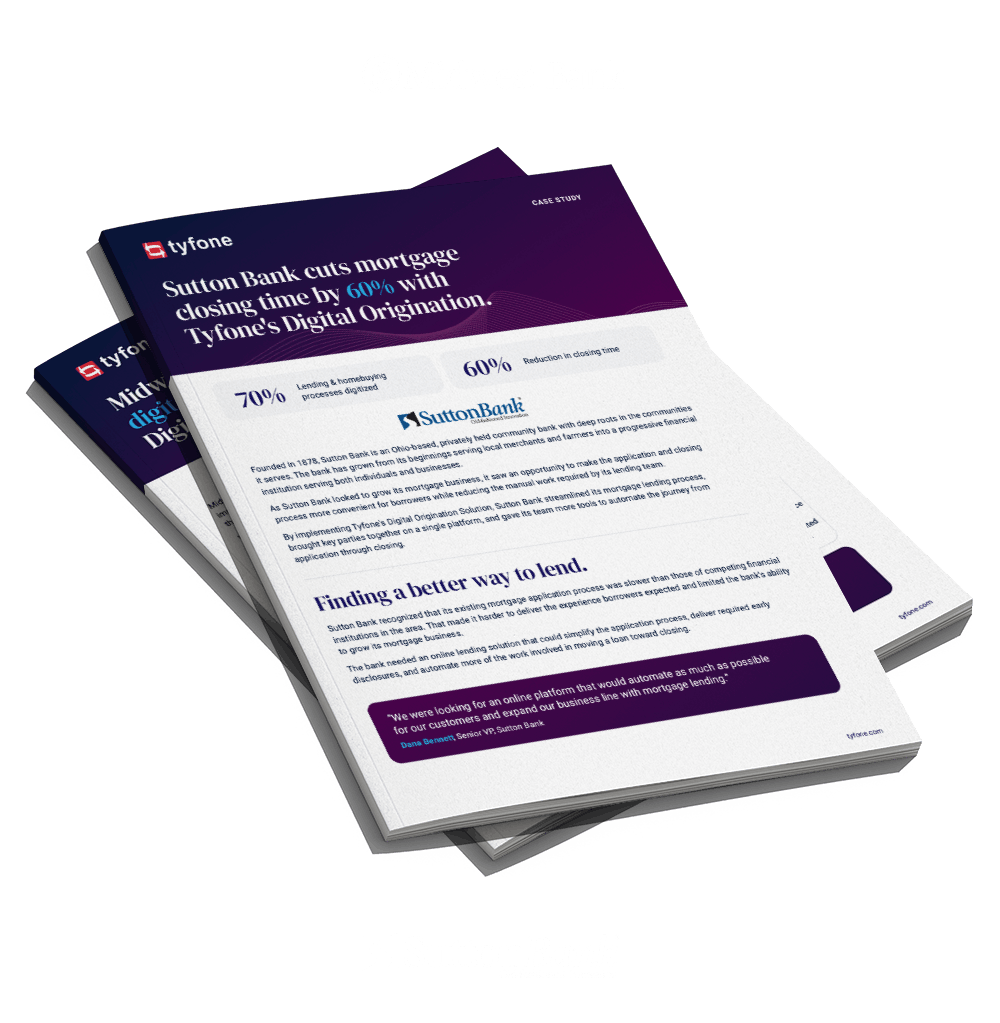
Borrowers expect speed. Your lending process should deliver.
Borrowers want answers fast. No waiting. No paperwork. No unnecessary back-and-forth. Manual processes and disconnected systems make lending harder, slowing decisions, adding work for staff, and creating friction at every step.
Tyfone makes lending faster and simpler with a flexible, white-label experience built around your policies. From application to funding, give borrowers a seamless experience across digital and in-branch channels.
Credit unions cannot afford to treat this as somebody else’s problem. Stronger fraud defenses and reliable member service belong in the same conversation.
DCUC has already highlighted practical examples. In a July 16, 2025, statement, the Council reported that Launch Credit Union used AI-powered monitoring to combat check and card fraud, citing more than $3.5 million in savings during 2024. That is a reported result from one institution—not a guarantee of what another credit union will achieve. It is also the kind of measurable outcome a board can examine.
But enthusiasm cannot become an excuse to stop asking hard questions.
NCUA’s public AI guidance states that credit unions may use AI and that the agency supervises those uses within its existing framework. The guidance identifies legal compliance, internal controls, ongoing monitoring, and vendor due diligence among its review areas. NCUA says its supervisory focus is risk management, not the tool itself.
For a credit union’s leadership, that translates into practical questions. A tool helping an employee locate a procedure is not the same as a system used in credit decisions. Understand the use, the information involved, and the potential harm and not simply the appearance of two letters on a product label.
My advice to credit union leaders is equally direct: know what you are buying. Know where member information goes. Ask how decisions are tested, how errors are discovered, and who can stop the system when something goes wrong. NCUA’s vendor guidance emphasizes understanding the provider’s business model, controls, and responsibilities. A sales presentation is not a substitute for that understanding.
And make sure members have somewhere to turn. “The computer said no” should never be the end of a conversation about a person’s financial future. Faster decisions are not better decisions when they are wrong, unfair, or impossible to explain. We should demand speed and accountability, not accept one in exchange for the other.
For smaller institutions, the next question is how to put that responsibility into practice with the staff and resources available.
In its May 13, 2026, comments ahead of a House Financial Services Committee markup, DCUC outlined requests for community-scaled access to AI, shared approaches for smaller institutions, stronger information sharing, and safeguards for responsible fraud prevention. Those were the Council’s policy recommendations, not new regulatory permissions.
The operational responsibilities remain. NCUA’s third-party guidance states that outsourcing does not remove a credit union’s responsibility for sound operations. Whether a service is purchased individually or through a shared arrangement, management needs to understand how it works and how members will be protected.
For me, the test is what a member experiences: a dependable answer, a protected account, and a person ready to help when the situation cannot be resolved on a screen.
The scope of third-party oversight is also under discussion. In a September 3, 2026, statement, DCUC opposed legislation expanding NCUA’s vendor authority, citing potential examination overlap, added costs, and effects on vendor competition.
Those positions concern the design of supervision. They do not replace the work inside a credit union: reviewing contracts, testing controls, planning for outages, and establishing who will respond when something fails.
Credit unions should bring that same discipline to their own decisions. Before approving an AI investment, a board should ask what member problem it solves and how success will be measured. Before expanding its use, management should be able to show that the promised benefits are real.
For defense credit unions, I would add one more question: does this strengthen the financial readiness of the people we serve? That is the mission. Not buying technology for its own sake. Not replacing judgment with automation. Not reducing a member to the output of a model.
Let us use better tools to stop fraud, improve service, and give our employees more capacity to help. Let us also keep asking whether the promised benefits are reaching the members those tools are supposed to serve.
Artificial intelligence should make the credit union difference stronger. It should never make the member matter less.
Jason Stverak is Chief Advocacy Officer for the Defense Credit Union Council, a role he assumed in April 2024. He previously served as Deputy Chief Advocacy Officer for Federal Government Affairs at America’s Credit Unions and was interim chief advocacy officer in 2022 and 2023. Earlier in his career, he was deputy chief of staff to Senator Kevin Cramer and held senior legislative roles in Congress and advocacy organizations. A prominent voice on Capitol Hill, Stverak is a frequent media contributor and has been recognized as a top lobbyist by The Hill and the National Institute for Lobbying and Ethics.
Disclaimer
The views, opinions, and perspectives expressed in articles and other content published on this website are those of the respective authors and do NOT necessarily reflect the views or official policies of Tyfone and affiliates. While we strive to provide a platform for open dialogue and a range of perspectives, we do NOT endorse or subscribe to any specific viewpoints presented by individual contributors. Readers are encouraged to consider these viewpoints as personal opinions and conduct their own research when forming conclusions. We welcome a rich exchange of ideas and invite op-ed contributions that foster thoughtful discussion.