Congress must act before the next financial crisis hits.

Congress has a choice to make.
It can strengthen America’s financial preparedness before the next crisis arrives, or it can once again wait until markets are under stress and families are asking why Washington failed to act when it had the chance.
The bipartisan NCUA Central Liquidity Facility Enhancement Act, introduced by Senators Alex Padilla (D-CA) and Kevin Cramer (R-ND), represents one of the most important financial services bills before Congress this year. Whether enacted as a stand-alone measure or incorporated into the Fiscal Year 2027 National Defense Authorization Act (NDAA), Congress should move this legislation immediately.
This should not be a partisan issue.
It should not become a casualty of legislative timing.
And it should not have to wait for another financial emergency to remind lawmakers why a strong emergency liquidity system matters.
The Central Liquidity Facility (CLF) exists for one simple reason: to ensure that well-managed credit unions have access to emergency liquidity when extraordinary events disrupt normal financial markets. It is not a bailout. It is not a subsidy. It is not a government rescue program.
It is a contingency plan.
Just as our military prepares before conflict and emergency managers prepare before natural disasters, our financial system must prepare before the next economic disruption. The CLF is part of that preparation.
For the Defense Credit Union Council, this issue is especially important because defense credit unions serve those who defend our nation. Our member institutions support active-duty service members, National Guard and Reserve personnel, veterans, Department of Defense civilians, military families and defense communities around the world.
Financial readiness is military readiness.
When a young, enlisted family faces a permanent change of station, when a deployment creates unexpected financial pressures, when government shutdowns delay paychecks, or when disasters strike military communities, defense credit unions are often the first institutions members call.
Those institutions cannot afford uncertainty in their own access to liquidity.
Neither can the country.
Congress recognized this reality during the pandemic when it temporarily modernized the CLF. Those reforms dramatically expanded participation through corporate credit union agent membership, giving thousands of community and defense credit unions meaningful access to the nation’s liquidity backstop.
The results spoke for themselves.
Access expanded from fewer than 300 participating credit unions to more than 4,100 institutions nationwide. Small credit unions serving rural communities, military installations, veterans, and underserved populations suddenly had the same confidence that comes from knowing emergency liquidity would be available if needed.
The system became stronger.
Consumers became better protected.
Financial stability improved.
Then Congress allowed those successful reforms to expire.
That decision reversed years of progress. More than 3,300 credit unions lost access to the CLF, and the credit union system forfeited billons in available emergency liquidity capacity.
Nothing about today’s economy suggests we can afford to ignore that loss.
Global instability continues to challenge financial markets. Interest rate volatility remains elevated. Cybersecurity threats continue to grow. Natural disasters are becoming more frequent and more costly. Military conflict abroad creates additional uncertainty for defense communities and service members.
The lesson should be obvious.
The next disruption will not arrive on Congress’s legislative calendar.
It never does.
Story continued below…
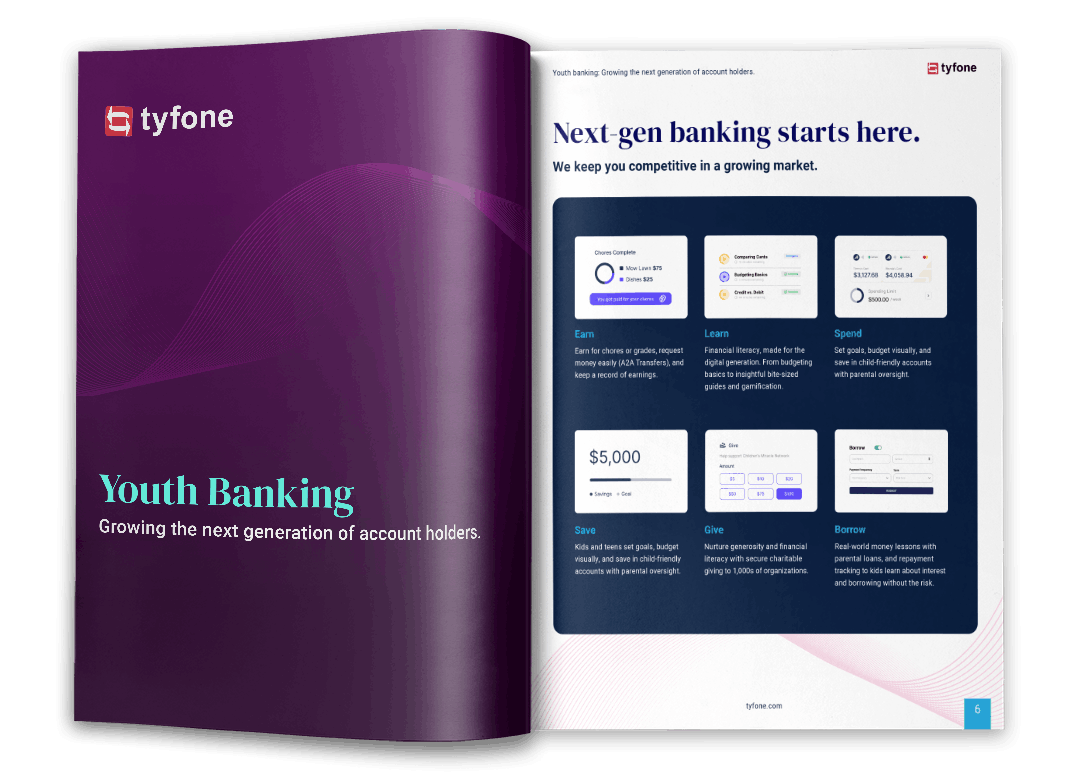
FREE PAMPHLET
Youth banking: Growing the next generation of account holders.
Financial habits are formed early, but most financial tools are designed for adults. As a result, families often rely on cash, shared cards, or disconnected apps to teach money management, making it difficult to balance independence with oversight.
At the same time, younger generations expect intuitive digital experiences, creating a gap between how they interact with money and how financial services are delivered. Financial institutions need age-appropriate solutions that engage younger account holders while supporting parents and caregivers.
The Padilla-Cramer legislation simply restores what already proved successful. It permanently authorizes reforms that demonstrated their value during one of the most significant financial disruptions in modern history. It strengthens access through agent members, improves the facility’s lending capacity and ensures the National Credit Union Administration has the tools necessary to respond quickly when liquidity is needed.
Most importantly, it helps protect smaller credit unions.
Large financial institutions typically have multiple funding sources and sophisticated access to capital markets. Smaller credit unions often do not. They rely on deposits, prudent balance-sheet management and contingent liquidity planning.
That is exactly why Congress created the CLF.
Without it, smaller institutions serving military bases, rural America and underserved communities are placed at a competitive disadvantage during periods of financial stress—not because they are poorly managed, but because they lack the size and market access of the nation’s largest financial institutions.
That should concern every member of Congress.
The legislation also reflects responsible fiscal stewardship. The CLF is funded by the credit union system not taxpayers. Restoring these authorities does not create a new entitlement program or establish another federal bailout fund. Previous Congressional Budget Office analyses of comparable legislation found no significant federal budgetary impact.
In other words, Congress can strengthen financial stability without increasing the federal deficit.
That is increasingly rare.
For DCUC, inclusion in the FY2027 National Defense Authorization Act is especially appropriate. Defense credit unions are integral to the financial resilience of America’s military community. They provide affordable credit, emergency assistance, financial counseling and mission-critical banking services to service members stationed across the globe.
Military families should never wonder whether the institutions serving them have access to emergency liquidity during a national crisis.
Protecting those institutions is part of protecting military readiness itself.
But if inclusion in the NDAA proves impossible, Congress must not allow procedural hurdles to become policy failures. The Senate Banking Committee and House Financial Services Committee should immediately advance the Padilla-Cramer bill as stand-alone legislation.
The legislative vehicle matters far less than the outcome.
America’s credit unions have done their part. They have demonstrated prudent management, supported members through economic crises, financed first-time homebuyers, helped small businesses survive, and stood beside military families through deployments, disasters and uncertainty.
Now Congress must do its part.
Lawmakers often speak about resilience, preparedness and learning the lessons of history. Here is an opportunity to demonstrate those principles with action rather than rhetoric.
We know these reforms work because Congress already tested them.
We know they improve financial stability.
We know they strengthen confidence.
We know they help protect military communities.
And we know waiting until the next crisis will be too late.
Congress should not squander this opportunity.
Pass the Padilla-Cramer Central Liquidity Facility Enhancement Act. Include it in the NDAA if possible. Advance it as stand-alone legislation if necessary.
Just pass it.
America’s credit unions, our military families and the millions of members who depend on them deserve nothing less.
Jason Stverak is Chief Advocacy Officer for the Defense Credit Union Council, a role he assumed in April 2024. He previously served as Deputy Chief Advocacy Officer for Federal Government Affairs at America’s Credit Unions and was interim chief advocacy officer in 2022 and 2023. Earlier in his career, he was deputy chief of staff to Senator Kevin Cramer and held senior legislative roles in Congress and advocacy organizations. A prominent voice on Capitol Hill, Stverak is a frequent media contributor and has been recognized as a top lobbyist by The Hill and the National Institute for Lobbying and Ethics.
Disclaimer
The views, opinions, and perspectives expressed in articles and other content published on this website are those of the respective authors and do NOT necessarily reflect the views or official policies of Tyfone and affiliates. While we strive to provide a platform for open dialogue and a range of perspectives, we do NOT endorse or subscribe to any specific viewpoints presented by individual contributors. Readers are encouraged to consider these viewpoints as personal opinions and conduct their own research when forming conclusions. We welcome a rich exchange of ideas and invite op-ed contributions that foster thoughtful discussion.