
The Crypto rules are finally coming. Will credit unions get shut out?

For years, Washington has debated digital assets while consumers, financial institutions and innovators have been left to navigate a patchwork of agency interpretations, enforcement actions and state rules. The Digital Asset Market Clarity Act offers Congress an opportunity to replace that uncertainty with a durable national framework; one that protects consumers, supports responsible innovation and allows trusted, regulated institutions to compete.
The legislation has made meaningful progress. The House passed H.R. 3633 with a strong bipartisan vote in July 2025. In May, the Senate Banking Committee advanced a substantially revised version, 15-9, and the bill was reported to the Senate on June 1. As of July 13, it remains on Calendar No. 423 awaiting floor consideration. That is an important milestone, but it is not the finish line. The Senate must still resolve outstanding policy questions, pass the bill, and reconcile its version with the House.
Congress should complete that work. The GENIUS Act created a federal framework for payment stablecoins, but the broader digital-asset market still needs clear rules governing asset classification, trading platforms, custody, disclosures, market integrity and the respective roles of the Securities and Exchange Commission and Commodity Futures Trading Commission. Uncertainty does not prevent innovation; it pushes innovation outside the regulated system, where consumers may have fewer protections and law enforcement may have less visibility.
For credit unions, the Senate bill contains a particularly important provision that would clarify that federal credit unions may use digital assets and distributed-ledger systems to deliver activities, products and services they are otherwise authorized to provide. It identifies custody, payments, digital-asset-secured lending and other services, extends comparable authority to insured state-chartered credit unions where state law permits, and preserves all otherwise applicable legal and supervisory requirements.
That clarification would materially improve the status quo. Current National Credit Union Administration guidance permits federally insured credit unions to establish certain relationships with third-party digital-asset providers, but federally chartered credit unions are not currently authorized to custody cryptocurrencies and other digital assets directly. Members can therefore be referred to outside platforms, yet their credit union may be unable to provide the same service within a prudentially supervised, member-owned institution.
This matters especially for defense credit unions. Servicemembers, veterans and military families are highly mobile, frequently transact across borders and are routinely targeted by sophisticated fraud. Financial readiness is inseparable from mission readiness. When these consumers seek digital-asset services, they should have the option to obtain them from institutions with established compliance programs, strong fraud controls and a direct commitment to their long-term financial well-being.
Story continued below…
FREE PAMPHLET
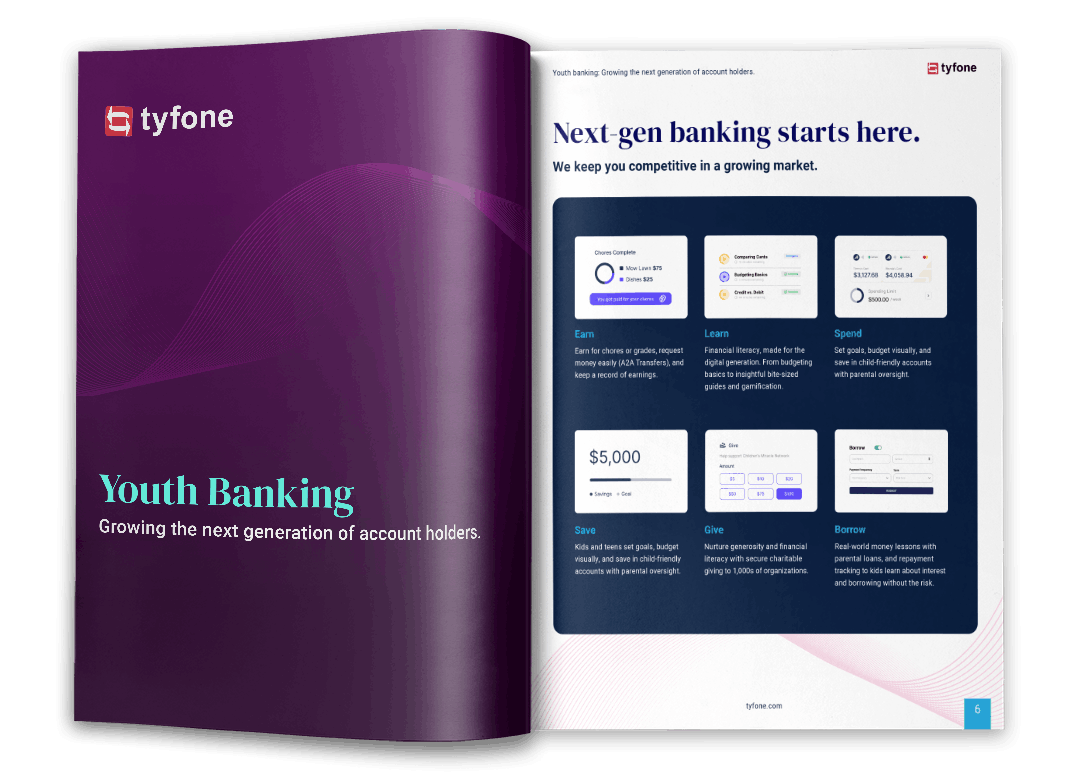
Youth banking: Growing the next generation of account holders.
Financial habits are formed early, but most financial tools are designed for adults. As a result, families often rely on cash, shared cards, or disconnected apps to teach money management, making it difficult to balance independence with oversight.
At the same time, younger generations expect intuitive digital experiences, creating a gap between how they interact with money and how financial services are delivered. Financial institutions need age-appropriate solutions that engage younger account holders while supporting parents and caregivers.
However, statutory authority alone will not guarantee meaningful credit-union participation. Without targeted refinements, complex registration, examination and compliance requirements could make the new market accessible only to the largest banks and technology platforms. Congress should preserve the bill’s protections while ensuring that implementation reflects the cooperative structure, scale and existing supervision of credit unions.
First, the final bill should ensure that the NCUA’s supervisory role is explicit throughout implementation and any interagency rulemakings involving federally insured credit unions. Broad references to “federal bank regulators” can unintentionally omit the credit-union regulator. Regulatory parity begins with naming the agency Congress expects to supervise the activity.
Second, Congress should explicitly include federally insured credit unions and credit union service organizations in the operative provisions that cover banks, affiliates and subsidiaries. Many credit unions achieve scale through CUSOs and shared-service models. Excluding those structures would leave smaller institutions with authority on paper but no practical means to build secure custody, settlement or compliance capabilities.
Third, implementing agencies should be directed to establish tiered requirements that are proportional to institution size, complexity and risk. Strong Bank Secrecy Act, anti-money-laundering, cybersecurity and consumer-protection standards are essential. But a one-size-fits-all regime would impose disproportionate costs on smaller, mission-driven institutions without necessarily reducing risk.
Fourth, the final language should provide unmistakable rules for custody, disclosures and share insurance. Consumers must understand that digital assets are not federally insured shares. At the same time, ordinary insured shares must remain protected, and digital assets held solely in custody should not automatically become balance-sheet liabilities requiring capital as though the institution owned them. Credit unions also need equal access to digital payment and settlement rails so statutory parity becomes operational parity.
The Senate is now closer than ever to a truly workable digital-asset market structure. It should act, but it should get the details right. A framework that includes credit unions on equal, risk-appropriate terms will expand consumer choice, strengthen competition and bring innovation inside the regulated perimeter. That is the clarity America needs.
Jason Stverak is Chief Advocacy Officer for the Defense Credit Union Council, a role he assumed in April 2024. He previously served as Deputy Chief Advocacy Officer for Federal Government Affairs at America’s Credit Unions and was interim chief advocacy officer in 2022 and 2023. Earlier in his career, he was deputy chief of staff to Senator Kevin Cramer and held senior legislative roles in Congress and advocacy organizations. A prominent voice on Capitol Hill, Stverak is a frequent media contributor and has been recognized as a top lobbyist by The Hill and the National Institute for Lobbying and Ethics.
Disclaimer
The views, opinions, and perspectives expressed in articles and other content published on this website are those of the respective authors and do NOT necessarily reflect the views or official policies of Tyfone and affiliates. While we strive to provide a platform for open dialogue and a range of perspectives, we do NOT endorse or subscribe to any specific viewpoints presented by individual contributors. Readers are encouraged to consider these viewpoints as personal opinions and conduct their own research when forming conclusions. We welcome a rich exchange of ideas and invite op-ed contributions that foster thoughtful discussion.