What Congress needs to hear from credit union leaders.
Credit union leaders should use their firsthand knowledge of members’ needs to strengthen bipartisan advocacy on issues ranging from military pay and interchange to lending limits, credit union tax status and regulatory costs. Real stories and practical examples from credit union communities can help lawmakers understand how their decisions affect the people credit unions serve.

Four days separate the December 11 deadline to fund the government from the December 15 payday on a military family’s calendar. For a spouse in Hawaii with a mortgage due and a loved one serving across the Pacific, those four days can mean putting off a decision about flying home for Christmas. A defense credit union can defer a car payment or help cover groceries. Congress can give that family the certainty of a paycheck earned in service to this country.
Yesterday at the Fairmont Orchid on Hawaii’s Big Island, I had the honor of speaking to well over 350 credit union leaders, including CEOs and board members, at the National Credit Union Management Association (NCUMA)’s Hawaii Conference. Kathy Anchors-Budd and her team put together a program where a director could hear Kansas City Fed President Jeff Schmid discuss payments, then sit across from a colleague who has to decide what to spend on fraud protection. That combination makes this conference worth the trip. I’m grateful to Kathy and to everyone who brought the experience of their members into that room.
My session was called “Election Results, Advocacy Consequences: What the New Congress Means for Credit Unions.” Democrats won the House and Senate. In January they will decide which bills get hearings and which questions regulators face under oath. President Trump will still hold the veto pen. Our members voted for candidates in both parties. They have every reason to expect us to work with both.
The outgoing Congress can still act. DCUC has asked congressional leaders to guarantee on-time pay for every military branch, including the Coast Guard, during any funding lapse. Defense credit unions have waived fees, deferred payments and made emergency loans during past shutdowns. A CEO who approved those measures can tell a lawmaker how many families needed help and what it took to get money into their hands.
We have also asked Congress to keep the Marshall–Durbin credit card routing mandate off the defense authorization bill and other year-end legislation. When a deployed servicemember spots a fraudulent charge, somebody takes the call, investigates the transaction and gets a replacement card overseas. Interchange helps pay for that work. Before changing the rules for routing a purchase, Congress should hear from the person who has to get that card to the member.
State lawmakers need that perspective, too. Merchant groups have sued federal regulators over protections for federally chartered institutions from an Illinois law restricting interchange. A state-chartered credit union reading about those protections still needs an answer specific to its charter. Whatever your charter, ask your processor what a change would cost under your contract. An actual figure gives your league and DCUC something a legislator can use before voting on a similar bill.
Earlier this month I asked Senator Elizabeth Warren to meet with defense credit unions about the proposed 10 percent cap on credit card rates. Consider a young servicemember buying tires before driving to a new duty station. If a credit union cannot cover the cost of extending a modest line of credit to someone with a short credit history, where does that member go? That question is why DCUC opposes a blanket cap.
Story continued below…
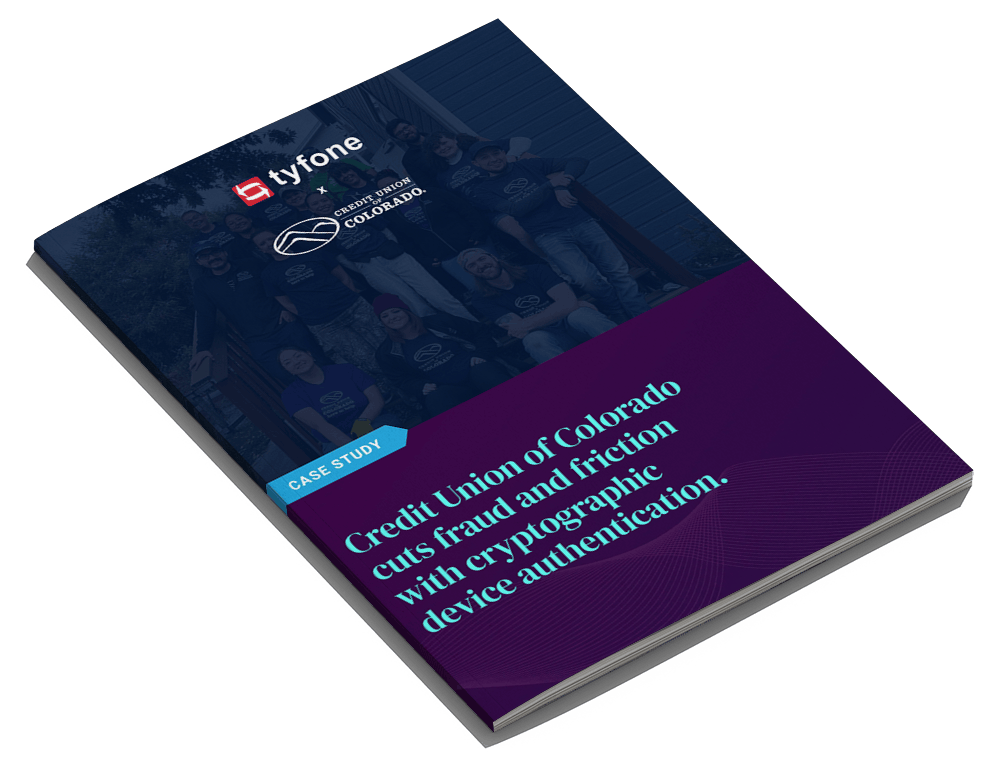
FREE CASE STUDY
CU of CO cuts fraud and friction with CDA.
Personalization in digital banking should go beyond changing colors, rearranging menus or adding a favorite team’s logo. Real personalization starts with knowing who the account holder is and understanding what they need.
Credit Union of Colorado (CU of CO)’s experience shows why trust comes first. By combining Cryptographic Device Authentication (CDA) with real-time fraud intelligence, the credit union strengthened security, reduced friction by 90% and cut manual fraud reviews by 98%.
We owe members equally candid answers about overdraft and nonsufficient funds fees. If I were a director heading home from Hawaii, I’d want to know what happened to a member whose account came up short twice in one week. What did we charge? Did anyone offer a less expensive option? When we find a better way to help that member, we have an answer worth giving at a congressional hearing.
We can explain our tax status in much the same way. Members own their credit union. Retained earnings might finance a loan or keep a teller in a town that lost its last bank branch. The director who voted to keep that branch open can tell a lawmaker what the decision cost and how far people would have to drive if the doors closed.
Congress also has a chance to open doors for veteran entrepreneurs. Picture a veteran who repaired equipment in uniform and now has enough customers to open a shop. The credit union has reviewed the business plan but has reached its member business lending cap. The bipartisan Veterans Member Business Loan Act would exempt qualifying loans from that cap. The veteran would still have to show how the shop could repay the debt. The lender would have room to say yes when the numbers work.
Smaller credit unions also need access to cash when their members need it. Allowing corporate credit unions to enroll groups of their members in the Central Liquidity Facility would make backup funding more accessible. Modernizing field-of-membership rules could help a credit union serve a neighboring town. A map showing the nearest branch and a board’s plan for reaching those households can make that case better than a page of talking points.
Today’s session on stablecoins raises a question for families stationed overseas. Sending money home on a Sunday has appeal. Before offering that service, a credit union should be able to explain who holds the funds and whom the member can call if a transfer fails.
Credit union leaders can speak directly to their regulator as well. The National Credit Union Administration proposes spending $325.4 million in 2027, up 2.9 percent from 2026. DCUC generally supports the budget and continued investment in cybersecurity. With fewer staff and more targeted exams, travel, administrative costs and outside contracts deserve a closer look. Written comments are due November 30.
When I worked on Capitol Hill, I learned to count on the people who returned a call with an answer they had taken the time to check. The leaders Kathy brought together in Hawaii can be those people for this Congress and the next. When a military spouse checks the account on payday, the question is whether the money is there. I want the lawmaker casting that vote to know whose family is counting on it.
Jason Stverak is Chief Advocacy Officer for the Defense Credit Union Council, a role he assumed in April 2024. He previously served as Deputy Chief Advocacy Officer for Federal Government Affairs at America’s Credit Unions and was interim chief advocacy officer in 2022 and 2023. Earlier in his career, he was deputy chief of staff to Senator Kevin Cramer and held senior legislative roles in Congress and advocacy organizations. A prominent voice on Capitol Hill, Stverak is a frequent media contributor and has been recognized as a top lobbyist by The Hill and the National Institute for Lobbying and Ethics.
Disclaimer
The views, opinions, and perspectives expressed in articles and other content published on this website are those of the respective authors and do NOT necessarily reflect the views or official policies of Tyfone and affiliates. While we strive to provide a platform for open dialogue and a range of perspectives, we do NOT endorse or subscribe to any specific viewpoints presented by individual contributors. Readers are encouraged to consider these viewpoints as personal opinions and conduct their own research when forming conclusions. We welcome a rich exchange of ideas and invite op-ed contributions that foster thoughtful discussion.