Congress still has work to do after election day.
The 119th Congress should use its remaining weeks to pass three bipartisan reforms: expand credit union lending to veterans, modernize federal loan maturity limits and make emergency liquidity access more practical for smaller institutions. Jason Stverak argues that lawmakers can deliver meaningful support for veterans, military families and the credit unions that serve them by including the measures in the defense bill or another must-pass package.

Election Day settles who will serve in the next Congress. It does not excuse the current Congress from finishing its work. Veterans trying to build businesses, military families managing household budgets, and credit unions serving their communities cannot put their financial needs on hold while Washington prepares for January.
Congress has time to deliver. Before the 119th Congress adjourns, lawmakers should enact three bipartisan reforms: expand credit unions’ ability to lend to veterans, modernize federal credit union loan maturities, and make emergency liquidity access more practical and permanent. The National Defense Authorization Act (NDAA) or another must-pass legislative package offers an opportunity to get this done.
At the Defense Credit Union Council, we represent more than 200 credit unions serving 47 million members. Our message to congressional leaders is straightforward: use the remaining weeks to solve problems that affect people who have already given so much to this country.
Start with veterans seeking business capital. Leadership, discipline, and technical skills can help someone become an entrepreneur. They cannot purchase equipment, cover payroll, or finance inventory without adequate funding.
The Federal Reserve’s 2026 Chartbook on Veteran-owned Firms, based on its 2025 Small Business Credit Survey, makes the need clear. Among majority-veteran-owned small employer firms, 38% reported credit-availability challenges, compared with 28% of firms with no veteran ownership.
Among firms facing financial challenges, 62% of majority-veteran-owned firms used personal funds, compared with 53% of firms with no veteran ownership. Among majority-veteran-owned applicants for loans, lines of credit, or merchant cash advances, 17% were denied and 30% were partially approved.
Those numbers describe decisions with consequences for household finances. Using personal resources to sustain a business can leave less available for family needs or emergencies. Receiving only part of a requested loan can mean postponing equipment purchases or passing up work.
Story continued below…
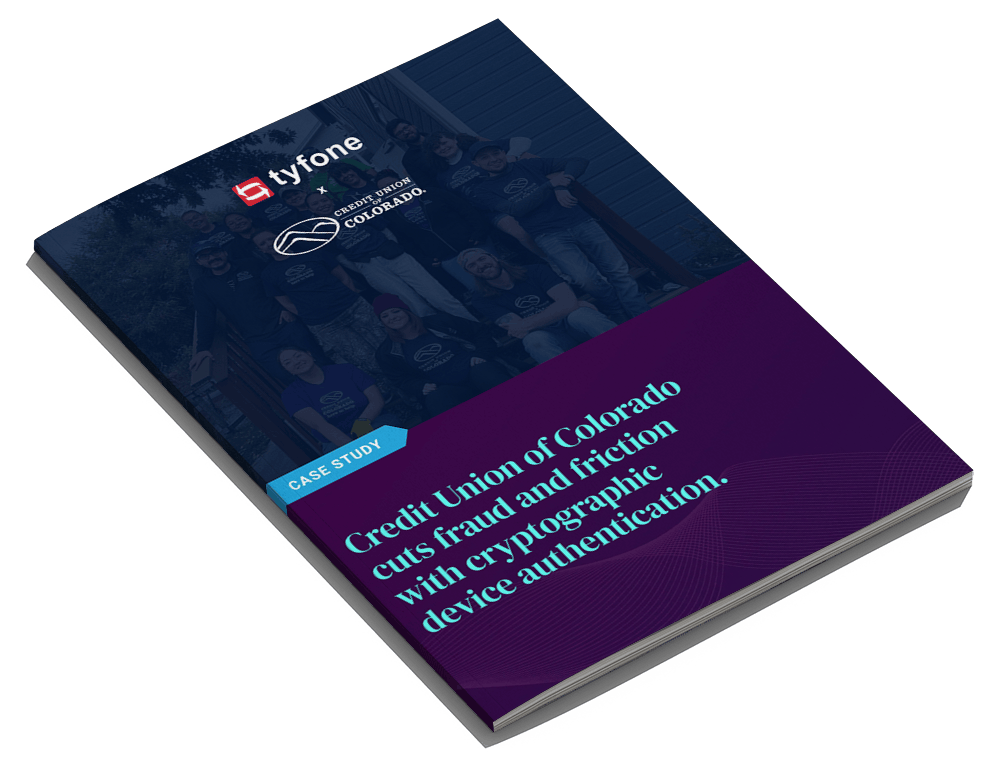
FREE CASE STUDY
CU of CO cuts fraud and friction with CDA.
Personalization in digital banking should go beyond changing colors, rearranging menus or adding a favorite team’s logo. Real personalization starts with knowing who the account holder is and understanding what they need.
Credit Union of Colorado (CU of CO)’s experience shows why trust comes first. By combining Cryptographic Device Authentication (CDA) with real-time fraud intelligence, the credit union strengthened security, reduced friction by 90% and cut manual fraud reviews by 98%.
A September 2025 Government Accountability Office reportidentified barriers veterans encounter, including difficulty establishing credit and business relationships after relocation, limited business networks, and lenders’ unfamiliarity with skills gained during military service.
Credit unions can help, but Congress has imposed another obstacle. At institutions subject to the member business lending cap, the ceiling is generally 12.25% of assets and can be lower depending on net worth. A willing credit union can reach that ceiling even when another veteran presents a sound loan application.
The Veterans Member Business Loan Act would exclude qualifying veteran loans from that aggregate limit. Credit unions would still evaluate repayment capacity and manage risk. The proposal creates no new federal lending program or government guarantee. It lets a responsible lending decision turn on the borrower’s qualifications rather than an institution’s remaining room under the cap.
DCUC and The American Legion have urged Congress to act. The benefits can also reach national defense: veteran-owned suppliers need working capital and equipment financing to fulfill contracts. Winning an opportunity means little if a business cannot afford to perform the work.
Congress should also modernize federal credit union loan maturities. The Expanding Access to Lending Options Act would raise the general limit from 15 to 20 years and allow the National Credit Union Administration to authorize longer terms through regulation. Existing exceptions already allow longer maturities for certain loans.
Repayment schedules should reflect the useful life of an asset and the borrower’s ability to repay. An unnecessarily short term can push monthly payments beyond reach. Longer terms can lower those payments, although they generally increase total interest. Borrowers deserve a clear explanation of that tradeoff and suitable choices.
The bill would also remove the principal-residence restriction from a specified residential mortgage provision. That matters for servicemembers stationed far from where they intend to retire who may want to purchase a future home before occupying it.
Finally, Congress should strengthen access to the Central Liquidity Facility, an existing source of contingent liquidity for credit unions. When temporary pandemic enhancements expired in January 2023, NCUA reported that 3,322 credit unions with less than $250 million in assets lost access.
The Padilla–Cramer reform would allow corporate credit unions acting as agents to purchase required facility capital stock for a subset of the credit unions they serve. Permanent flexibility would make participation more workable, especially for smaller institutions. Preparing for funding disruptions helps credit unions remain dependable when members need them most.
These proposals deserve agreement before adjournment. Congressional leaders should bring the relevant committees together, resolve technical differences, and secure a place for the reforms in the final NDAA or another must-pass bill.
These measures also give lawmakers a practical way to work across party lines after a divisive election. Members do not have to agree on every financial policy question to recognize that qualified veterans need capital and military families need dependable financial services. Agreement on these specific reforms would produce results people can use in their everyday lives.
Veterans Day will soon bring speeches about honoring service. Congress can give those words practical meaning by expanding responsible access to credit and strengthening the institutions military families trust. Whatever the election results, this Congress still has the authority, the opportunity, and the responsibility to finish the job.
Jason Stverak is Chief Advocacy Officer for the Defense Credit Union Council, a role he assumed in April 2024. He previously served as Deputy Chief Advocacy Officer for Federal Government Affairs at America’s Credit Unions and was interim chief advocacy officer in 2022 and 2023. Earlier in his career, he was deputy chief of staff to Senator Kevin Cramer and held senior legislative roles in Congress and advocacy organizations. A prominent voice on Capitol Hill, Stverak is a frequent media contributor and has been recognized as a top lobbyist by The Hill and the National Institute for Lobbying and Ethics.
Disclaimer
The views, opinions, and perspectives expressed in articles and other content published on this website are those of the respective authors and do NOT necessarily reflect the views or official policies of Tyfone and affiliates. While we strive to provide a platform for open dialogue and a range of perspectives, we do NOT endorse or subscribe to any specific viewpoints presented by individual contributors. Readers are encouraged to consider these viewpoints as personal opinions and conduct their own research when forming conclusions. We welcome a rich exchange of ideas and invite op-ed contributions that foster thoughtful discussion.