
Part 2
The CEO seat: Accountability changes everything.
Looking back, one of the most important lessons I have learned is that leadership and accountability cannot be separated. The CEO’s authority is visible. Accountability is often invisible. Yet accountability is what ultimately defines the position.

About this series.
When I became CEO of Dort Financial Credit Union in March 2022, I expected to spend much of my time focused on growth, financial performance, strategic execution, and organizational success.
Those priorities remain important. However, one of the first and most important lessons I learned as a first-time CEO had little to do with strategic plans, technology investments, or balance sheets.
It had everything to do with people.
Like many leaders stepping into a CEO role, I assumed strategy would drive success. Over the past several years, I have come to a different conclusion. Strategy is essential, but culture determines whether strategy succeeds.
The strongest strategic plan in the world cannot overcome a disengaged workforce. Conversely, highly engaged employees can overcome obstacles, adapt to change, and execute even the most ambitious organizational goals.
That lesson became clear within months of my tenure.
In my first article, I shared why culture became one of my earliest leadership priorities as CEO. Building an engaged workforce created the foundation for everything else we hoped to accomplish.
The next lesson I learned was equally important, but far more personal.
When you become CEO, accountability changes everything.
Before becoming CEO of Dort Financial Credit Union in 2022, I spent years in executive leadership roles. I participated in major decisions, led large teams, and helped shape organizational strategy. Like many aspiring CEOs, I believed I understood the responsibilities that came with the position.
What I underestimated was how different accountability feels when the final decision rests with you.
As an executive, you contribute to decisions. As a CEO, you own the outcomes.
That reality became clear during some of the most significant decisions we have made as an organization.
One of those decisions involved the acquisition of Flagler Bank in Florida. Acquisitions require months of due diligence, financial analysis, regulatory review, and strategic discussion. Advisors, consultants, attorneys, executives, and board members all play important roles in evaluating opportunities.
But eventually a moment arrives when the analysis is complete, the presentations are finished, and a decision must be made.
- Will this create long-term value for the organization?
- Is the timing right?
- Are the risks understood and manageable?
- Will the organization be stronger because of this decision?
Many people contribute to answering those questions, but ultimately the CEO bears responsibility for the recommendation and the outcome.
What I learned through that process is that leadership is not about having perfect certainty. It is about making the best possible decision with the information available and accepting accountability for the result.
The same lesson emerged in a very different way when we decided to secure the naming rights for Flagler Credit Union Stadium.
The opportunity generated excitement, but it also generated debate. As credit union leaders, we steward our members’ resources. Any investment that receives public attention inevitably attracts scrutiny and differing opinions.
- Would the investment strengthen our brand?
- Would it increase awareness in a growing market?
- Would it position the credit union for long-term growth?
- Reasonable people could view the opportunity differently.
What I discovered was that CEO decisions often involve balancing measurable outcomes with strategic vision. Not every decision can be evaluated on a spreadsheet alone. Some require leaders to make informed judgments about direction, opportunity, and the organization’s future.
Those decisions can be uncomfortable because agreement is rarely unanimous.
- Employees may disagree.
- Members may disagree.
- Community stakeholders may disagree.
And yet the responsibility to decide remains.
Story continued below…
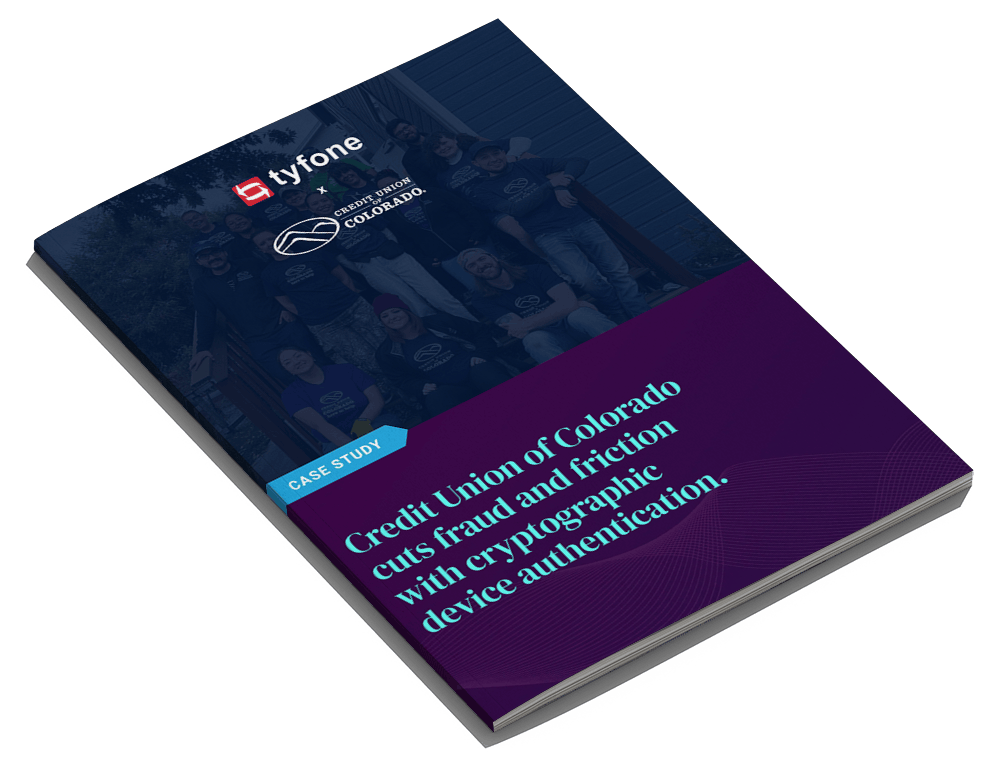
FREE CASE STUDY
CU of CO cuts fraud and friction with CDA.
Personalization in digital banking should go beyond changing colors, rearranging menus or adding a favorite team’s logo. Real personalization starts with knowing who the account holder is and understanding what they need.
Credit Union of Colorado (CU of CO)’s experience shows why trust comes first. By combining Cryptographic Device Authentication (CDA) with real-time fraud intelligence, the credit union strengthened security, reduced friction by 90% and cut manual fraud reviews by 98%.
One of leadership’s biggest misconceptions is that effective CEOs always know the right answer. My experience has been quite the opposite.
The longer I serve in this role, the more I recognize that leadership is not about knowing every answer. It is about asking the right questions, gathering diverse perspectives, making informed decisions, and remaining accountable for the outcomes.
That accountability becomes even more important when things do not go as planned.
People do not expect leaders to be perfect. They do expect leaders to be transparent, honest, and willing to own the results of their decisions.
In many ways, accountability becomes the foundation of trust. Boards trust leaders who communicate openly. Employees trust leaders who accept responsibility. Organizations become stronger when accountability is demonstrated consistently, particularly during difficult moments.
Looking back, one of the most important lessons I have learned is that leadership and accountability cannot be separated.
The CEO’s authority is visible. Accountability is often invisible. Yet accountability is what ultimately defines the position.
Whether making a transformational acquisition, investing in a new market, or pursuing a strategic opportunity, the responsibility for the decision remains the same.
The CEO doesn’t need every answer, but the CEO must own the outcome.
Leadership takeaway.
CEOs do not need perfect information, complete consensus, or guaranteed outcomes. They need the courage to make informed decisions, the humility to learn from the results, and the discipline to accept accountability for both success and failure. That is the true weight of the CEO seat.
Brian Waldron is the President and CEO of Dort Financial Credit Union, a $2.4 billion-asset institution based in Grand Blanc, Michigan. He joined Dort Financial in March of 2022, coming from Hudson Valley Credit Union, an $8 billion-asset institution located in Poughkeepsie, New York. There, he served as the Senior Vice President of Lending.
Dort Financial has 123,000 members.
Disclaimer
The views, opinions, and perspectives expressed in articles and other content published on this website are those of the respective authors and do NOT necessarily reflect the views or official policies of Tyfone and affiliates. While we strive to provide a platform for open dialogue and a range of perspectives, we do NOT endorse or subscribe to any specific viewpoints presented by individual contributors. Readers are encouraged to consider these viewpoints as personal opinions and conduct their own research when forming conclusions. We welcome a rich exchange of ideas and invite op-ed contributions that foster thoughtful discussion.