
Your next outage will test more than your technology.
Recent disruptions at Microsoft, the FAA and major banks show why financial institutions need trusted teams, prepared vendors and reliable peer networks before the next crisis hits.

In the span of five days, millions of people lost their email, the sky, and access to their bank balances.
And based on everything stated publicly so far, none of the three has been attributed to a cyberattack.
Notice how carefully I said that. Publicly stated. Not proven, not closed, not guaranteed. Root cause reviews take time, initial explanations sometimes change, and organizations under pressure tell us what they know at that moment, not everything that will eventually be known.
But here’s what should keep you up at night either way: whether or not an adversary started any of these fires, adversaries absolutely showed up to work the smoke.
I’ve been thinking about this week through a lens most CIOs don’t get to use. Before I ever had to brief a board on an outage, I trained to work through one in a much smaller, much more isolated place.
Lessons From a Lunar Habitat
I served as Science Communications Officer on the Selene IV crew, a lunar analog mission with HI-SEAS in collaboration with NASA Goddard. An analog mission puts a crew in an isolated habitat and asks them to live and work as if they were on the Moon, with all the constraints that come with it.
Here’s what nobody tells you about mission planning: the plan is not the point. The plan is the thing you build so that you understand your systems well enough to abandon it intelligently.
During our mission, we had moments that went “off script”. One in particular that I have recalled this week was we experienced a critical disruption to our communications while some of us were on EVA. In space, as it is in life, the environment can be brutal and threatening. During our EVA, the environment around us changed drastically and very quickly. Comms were down, and our commander had no way to effectively communicate how threatening it had become. In our training, we had learned how to spot and look for changes that were risky, which we did, and we quickly abandoned the EVA and began to return to the safety of our habitat. Due to the environmental shift, our comms were disrupted but the closer we returned to the hab, the comms began to come back in only for us to learn distress and concern from our commander. Was our life in danger…no. But our gear, suits, and equipment were not prepared for exposure to these elements and could have caused issues, loss of equipment, loss of expensive materials, etc.
When something fails in a habitat, you can’t open a ticket and wait. You have the people inside those walls, the procedures you rehearsed together, and the trust you built before anything went wrong. That’s it. Your crew is your resilience strategy.
I came home convinced that most organizations badly underinvest in exactly that. This week proved it.
Story continued below…
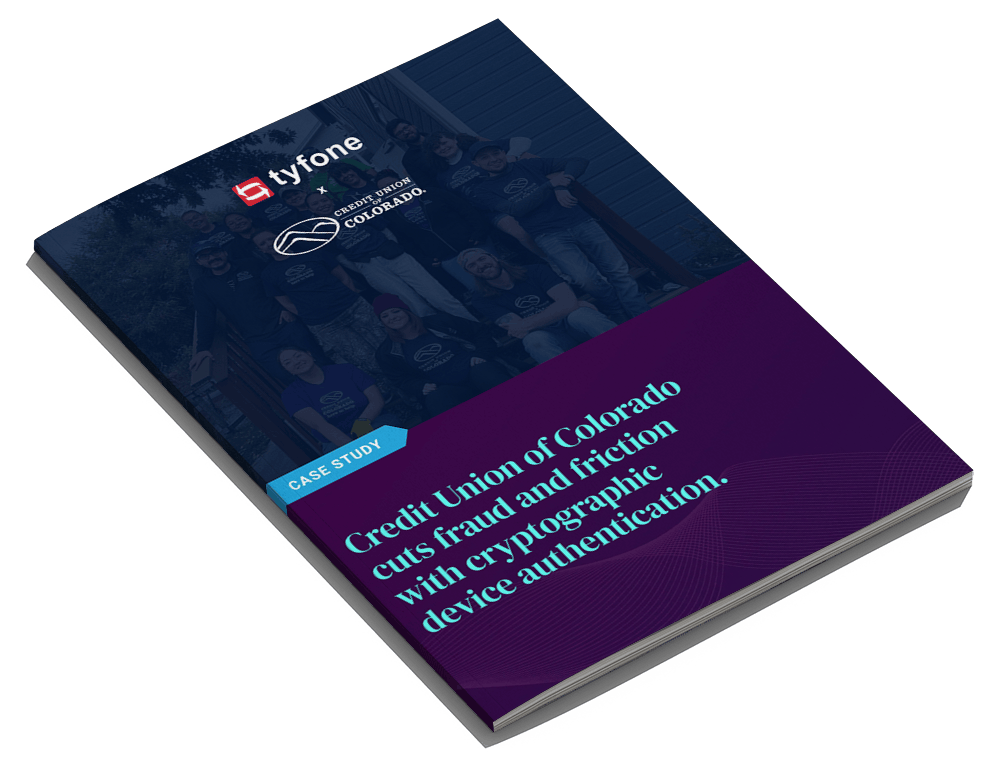
FREE CASE STUDY
CU of CO cuts fraud and friction with CDA.
Personalization in digital banking should go beyond changing colors, rearranging menus or adding a favorite team’s logo. Real personalization starts with knowing who the account holder is and understanding what they need.
Credit Union of Colorado (CU of CO)’s experience shows why trust comes first. By combining Cryptographic Device Authentication (CDA) with real-time fraud intelligence, the credit union strengthened security, reduced friction by 90% and cut manual fraud reviews by 98%.
The Week Everything Went Down
Let’s walk through what actually happened, because the details matter more than the headlines.
Thursday: Microsoft. Microsoft’s email and core productivity services went dark for roughly 24 hours, starting Thursday afternoon GMT and hitting users in 74 countries. Outlook, Teams, and Copilot were all affected. On Capitol Hill, House staff said the outage wiped out a full day of legislative work. See Microsoft says affected services fully recovered following worldwide outage
The cause is the part every technology leader should study. Microsoft’s own record attributes it, preliminarily, to a problem from an earlier network capacity upgrade that only surfaced after a later network change. Reporting on the preliminary post-incident review goes further: a defect introduced by a July 2026 update to Microsoft 365 gateway servers had sat undetected for months, and roughly fifteen hours before the outage, Teams automatically failed over to the primary gateway that also serves Exchange Online. See Microsoft 365 timeline, On-Site Technology; Al Jazeera; WindowsForum summary of the preliminary report and Microsoft 365 Outage, November 12, 2026: What Went Down and the Timeline
That really sinks in. If what they say is accurate, that means that a failover, the very mechanism designed to keep things running, helped push the system over the edge.
Microsoft has said its service health records show no indication the outage resulted from malicious activity. That is the official position, and it’s the one we should report. But the threat actors didn’t wait for a post-incident report.
Within hours of the disruption, phishing messages appeared using the outage as a pretext to push recipients toward credential-harvesting pages. One lure claimed mail flow had been interrupted, cited a real incident ID, and warned that held messages would be deleted unless the user acted. Researchers also observed the outage theme being used in text messages and fake IT support calls. See Fortra; Mimecast; Field Effect; Computerworld
That’s the playbook. Real event, real incident number, real urgency. Your users were already waiting for exactly that email.
Friday: The FAA. The FAA ordered a nationwide ground stop shortly before 4 p.m. Eastern after a communications problem hit every Air Route Traffic Control Center in the country. More than 10,000 flights were disrupted, with delays and cancellations spilling into the weekend. Transportation Secretary Duffy said upgrade work on an old telecommunications system could be a cause, though some air traffic controllers publicly questioned that explanation. The FAA chief said as many as 17 of 22 centers were affected, while stressing that none actually went dark. See CNBC; CNN; AeroTime ATC communications outage impacting flights across US
The timing is almost too on the nose. Just hours before the ground stop, the White House and DOT asked Congress for an extra $30.1 billion for aviation modernization, including $10.1 billion for air traffic control. Modernization is necessary. Modernization is also, every single time, a change event.
Monday: The banks. Thousands of customers had trouble reaching online accounts at several major U.S. banks after a technical problem at JPMorgan Chase rippled through the financial system. Chase said a software bug affecting internal hardware systems was delaying transactions. So they say. The bank noted the issue may have touched other banks receiving its slowed transactions, and said there was no evidence of a cyber link. Complaints spiked at Capital One, Truist, Wells Fargo, and Zelle, among others, though service was back to normal early Tuesday. See CBS News; NBC News; Al Jazeera Bank outages today: Live updates as JPMorgan Chase technical issue impacts financial services – ABC7 New York
Again, if this is truly the explanation on this one then that means one institution’s bug was the root cause. Customers at a half-dozen other banks feeling it. That’s not a Chase story. That’s an interconnection story.
The Common Thread Nobody Wants to Hear
Here’s my analysis…these three events share a pattern that should alarm every leader in Financial Services.
First, change is a threat vector. Upgrades, patches, failovers, and network changes caused or contributed to all three, according to what’s been stated so far. We treat change management as paperwork. This week, it was the whole ballgame.
Second, defects hide. A flaw that sits dormant from July to November isn’t a testing failure alone. It’s a reminder that your environment is never fully known, and your vendor’s environment is even less known to you.
Third, concentration amplifies everything. When one email platform, one air traffic network, or one large bank’s transaction flow stumbles, the blast radius is national. Your institution may not be the one that fails. It may simply be downstream of the one that does.
Fourth, disruption is an opening. An outage is chaos, and chaos is an attacker’s favorite operating environment. Users are anxious, help desks are flooded, normal verification steps get skipped “just this once,” and every inbox is primed for a message that looks like a fix. Whether or not a threat actor causes the outage, they can use it to creep in, escalate access, deepen the disruption, or simply spread fear.
That’s why I won’t tell you this week was “just” technical. Cyberattacks are a real and present threat to Financial Services, and it would be naive to rule out that malicious activity played some role in one or more of these events, or that it will play a role in the next one. We go with what’s publicly stated. We don’t stop asking questions.
The Insider Threat You’re Not Looking For
When most people hear “insider threat,” they picture something dramatic. A disgruntled employee walking out with a thumb drive. A saboteur. Someone with bad intent.
That exists. But it’s a narrow picture, and it’s not the one I worry about most.
CISA’s own definition makes clear that an insider threat can be either intentional or unintentional, and that negligence alone, exposing an organization through carelessness, qualifies. Once you accept that intent isn’t required, the list of potential insider threats gets much longer, and much more uncomfortable.
Sometimes the insider threat is a person. Sometimes it’s a team operating in a silo. Sometimes it’s a process that nobody owns, or a change management procedure that exists on paper but gets bypassed under deadline pressure. Sometimes it’s the absence of a process entirely.
And sometimes, I’ll say it plainly, the insider threat is weak leadership. A leader who doesn’t fund resilience until after the outage. A leader who discourages bad news from traveling upward. A leader who treats a near miss as luck instead of a warning. None of that requires malice. All of it creates risk from the inside.
The “inside” is also bigger than your org chart. CISA’s insider threat guidance recognizes that these threats can involve people outside the organization, including third parties, whether intentional or not. Think about who already has a key to your house:
- Your third parties. A vendor’s untested update runs inside your environment with your trust attached to it.
- Support services. Help desks, managed service providers, and vendor support lines are prime social engineering targets, especially during an outage when a caller “from IT” offering a fix sounds like a lifeline.
- Your own government. Not as a villain (but at times arguably it is), but as a critical dependency. Public infrastructure like air traffic control, payment systems, and regulatory platforms sits inside your operating model, yet you can’t patch it, staff it, or fund it. When it falters, it affects you exactly the way an internal failure would.
An insider threat doesn’t need a motive. It needs access and a gap.
The Threat Vector Nobody Patches
There’s one more threat vector I want to name, and it’s one we almost never put in a risk assessment: the media frenzy itself.
Let me be clear about what I mean. I value journalism, and I’ve linked to plenty of it in this article and my previous publications. I love the connection technology has given us. What I’m talking about is the too-muchness of it all. The over-sensationalized headline. The rush to be first instead of right. The “who’s on first” scramble where speculation gets published, shared, and amplified long before anyone knows anything.
This week showed exactly how that plays out. As airline, bank, and tech disruptions piled up alongside a nationwide emergency alert test, social media filled with claims of a coming nationwide blackout, a prolonged internet shutdown, AI-driven cyberattacks, and bank account resets. One cybersecurity CEO noted that rumors were circulating that November 17 would be a massive cyberattack day. Bloomberg reported Costco shoppers stocking up on emergency supplies as the posts spread.
Meanwhile, no U.S. agency and no affected company had tied the outages to a cyberattack or a foreign actor. Even our leaders weren’t on the same page. One member of Congress publicly referred to “today’s cyberattack” and called for an immediate briefing, while the Secretary of State said there was zero evidence connecting the outages or pointing to malign actors.
Notice the tension with what I said earlier. I won’t rule out malicious activity, and I don’t think you should either. But keeping an open question open is very different from broadcasting a conclusion nobody has reached. One is discipline. The other is fuel.
And that fuel is profitable. A large study published in Nature Human Behaviour, built on randomized trials, found that negative words in headlines increased news consumption while positive words decreased it, with each added negative word in an average headline lifting click-through rates by 2.3%. Fear isn’t a side effect of the attention economy. It’s the business model.
Here’s why that matters to a bank. Fear causes a chain reaction. Customers panic and pull cash. Employees click the “urgent” email. Help desks get flooded. And every one of those reactions is the exact condition an attacker, or simple human error, needs to do damage. The frenzy doesn’t just report on disruption. It manufactures more of it.
It’s also fair to ask who benefits when fear drives our purchases and life decisions. I’ll stay with what’s on the record: momentum for a congressional stock-trading ban has grown after high-profile controversies, such as lawmakers trading heavily right before and after the early COVID-19 shutdowns in 2020. The House passed a partial restriction in July 2026, but a stricter Senate measure has largely stalled. When the people writing the rules can also hold stakes in the companies that profit from public panic, that’s a conflict of interest worth naming, and Congress has been arguing about it for years.
Through the years, whether that be on a mission, or in my seat as a CIO, I have learned that how information moves through a crew matters as much as the information itself. Unverified information spreads faster than verified information, and panic is contagious in a confined space. The same is true of an organization. Your crew needs to know where the truth comes from before the frenzy starts telling them otherwise.
Which is exactly why your crew matters so much.
“Your Circle Matters”
How many times did our parents or grandparents tell us that? Who you run with shapes who you become. Who you can call at 2 a.m. determines how bad your 2 a.m. gets.
I cannot say this enough: they were right, and it applies to technology leadership more than any framework I’ve ever read.
In a habitat, your circle is literal. Six people, one airlock, no exits. In a bank, your circle is wider and harder to see, but it’s just as real. I think about it as three crews, and you need all three.
Crew One: The People Inside Your Walls
Your internal team and leadership are your habitat crew. When Microsoft went down on Thursday, how did your staff communicate? If the answer was “we waited,” that’s a gap.
Ask yourself:
- Does your team have an out-of-band communication channel that doesn’t depend on the platform that’s down?
- Does your executive team know, before an incident, who makes the call to activate contingency procedures?
- Have you actually rehearsed a productivity-suite outage, or only a ransomware tabletop?
On an analog mission, you don’t meet your crewmates on launch day. You train together until you can anticipate each other. Your incident response team deserves the same investment. Trust built in calm water is the only kind you’ll have available in a storm.
Crew Two: Your Vendors and Third Parties
This is where the week should keep community bank leaders up at night. Most of us don’t run our own core, our own email, or our own payment rails. We run relationships.
The regulators have been telling us this for years. The 2023 Interagency Guidance on Third-Party Relationships lays out a full life cycle: planning, due diligence and selection, contract negotiation, ongoing monitoring, and termination.
In my experience, most institutions are strong at the front of that life cycle and weak in the middle. We negotiate hard and diligence thoroughly, then treat ongoing monitoring as an annual questionnaire.
A vendor relationship is not a contract. It’s a crew assignment. You should know:
- Who your named contacts are, and whether they’ll actually pick up during an incident
- What your vendor’s change calendar looks like, and whether major changes are communicated before they happen
- Which of your critical services quietly depend on the same underlying provider, so one failure doesn’t take out your “redundant” option too
If you’ve never spoken with your key vendors outside of renewal season, you don’t have a relationship. You have an invoice.
Crew Three: Your Peers
This is the crew most leaders neglect, and it’s the one that pays off fastest when things break.
When the banks started lighting up Downdetector on Monday, the first question every CIO asked was some version of: “Is it just us?” The fastest, most reliable answer to that question doesn’t come from a news site or a viral post. It comes from a peer you trust enough to text.
That’s the real value of information-sharing communities like ISACs (I’m a member of CB-ISAC), InfraGard, and local IT and CIO councils. Yes, the threat intel matters. But the relationships matter more. When the official channels are slow and the rumor mill is fast, your network is your early warning system, your sanity check, and sometimes your playbook.
You can’t build that network during an incident. You build it over coffee, at chapter meetings, and by showing up when nothing is on fire.
What You Should Do Before Next Monday
This is the urgent part. The next outage is not hypothetical, and it may not wait for your next planning cycle.
Rehearse the boring failure, then add the opportunist. Run a tabletop this quarter that starts with a vendor change gone wrong: email down for 24 hours, payments delayed by a counterparty. Then layer in what actually happened this week: outage-themed phishing hitting inboxes and a “help desk” caller offering to restore access. See how your people respond when the friction and the attacker arrive together.
Map your concentration. Identify every critical service that shares an underlying provider. If your backup communication channel runs on the same platform as your primary, you don’t have a backup.
Audit your inside. Look for the processes without owners, the changes that skip review, and the decisions with no clear escalation path. Ask honestly whether your leadership culture rewards people for raising risk early. Those gaps are insider threats, whether or not anyone intends harm.
Set your information discipline. Before the next incident, decide which sources your team treats as authoritative: vendor status pages, regulator notices, your ISAC, your peers. Tell staff where official updates will come from, and have customer-facing messaging ready so your institution is the calm voice in the room, not another echo of the noise.
Call three vendors. Not to audit them. To ask how they’ll communicate with you the next time they make a significant change, and who you call when they don’t.
Text three peers. Strengthen the relationships you’ll lean on during the next “is it just us?” moment.
Give your team permission to pivot. The best plan in the world fails if your people are afraid to abandon it. Make it explicit that adapting under pressure is a strength, not a deviation.
The Mission Is the Crew
On an analog mission, you learn quickly that the habitat doesn’t keep you safe. The procedures don’t keep you safe. The people do.
This week, three massive systems failed. As far as anyone has publicly said, no adversary pulled the trigger, but adversaries showed up within hours anyway to work the confusion, and the frenzy did the rest. The institutions that came through best weren’t the ones with the thickest policy binders. They were the ones whose people already knew each other, already trusted each other, and already knew who to call.
Your circle matters. It always has.
Monica Parks is a results-driven IT executive with more than 25 years of experience leading technology initiatives, digital transformation, cybersecurity frameworks, and operational enhancements across banking, non-profits, and financial sectors. Her expertise spans cyber defense, forensics, IT strategy, security awareness, incident response, risk management, disaster recovery, network administration, data governance, and regulatory compliance, with a consistent focus on aligning technology with business objectives and driving operational efficiencies.
Disclaimer
The views, opinions, and perspectives expressed in articles and other content published on this website are those of the respective authors and do NOT necessarily reflect the views or official policies of Tyfone and affiliates. While we strive to provide a platform for open dialogue and a range of perspectives, we do NOT endorse or subscribe to any specific viewpoints presented by individual contributors. Readers are encouraged to consider these viewpoints as personal opinions and conduct their own research when forming conclusions. We welcome a rich exchange of ideas and invite op-ed contributions that foster thoughtful discussion.