
Joe Kent’s exit and the cost of silencing Security Professionals.

The departure of Joe Kent from his role at the White House didn’t just make headlines — it made me stop and think deeply about what we ask of the people we place in our most critical security positions, and what happens when those people dare to have a conscience.
Who Is Joe Kent?
Let’s be clear about who we’re talking about, because context matters.
Joe Kent is a retired U.S. Army Special Forces Master Sergeant and decorated combat veteran with over two decades of service. He completed more than a dozen combat deployments across some of the most dangerous theaters in the world — Iraq, Afghanistan, Syria, and beyond. He was a Green Beret. He served in the CIA’s paramilitary operations. He has operated in environments where the margin for error is zero, and the cost of failure is measured in lives — sometimes the lives of the people standing next to you. His expertise is extensive…way more than I could elaborate on.
This is not a man who arrived at a senior national security role by accident. He arrived there because of an extraordinary career built on discipline, sacrifice, courage, and an unrelenting commitment to this country. He has the kind of résumé that most security professionals — military or civilian — can only aspire to.
And yet, when President Trump was pressed about Kent’s departure, the word that surfaced was: “weak” and the attempt to dismiss the conversation was swift.
The Weight We Carry in Security Roles
I want to speak directly to anyone who has ever held a security role — whether in national security, intelligence, or cybersecurity — because I think we are the only ones who truly understand what that word means in this context, and why it is so profoundly misplaced.
Those of us in these roles do not clock out. We do not leave the weight of our responsibilities at the office. We carry it home. We carry it to dinner with our families. We carry it into sleepless nights where our minds are still running threat models at 3 a.m. We carry it in our bodies — in the form of fried nervous systems, chronic stress, and personal sacrifices that rarely get acknowledged and almost never get applauded.
We operate in a world of extraordinary pressure. Our decisions can have national, organizational, or legal consequences. We are scrutinized by regulatory agencies. We are held liable under the law. We are the first ones called when something goes wrong, and sometimes the first ones blamed — even when we spent months warning that it would go wrong.
We know things we wish we didn’t know. We see risks that others are not equipped or willing to see. And we carry the burden of that knowledge quietly, professionally, and with integrity — because that is what the role demands.
That is not weakness. That is the definition of strength. Read that again.
That is not weakness. That is the definition of strength. Period.
Story continued below…
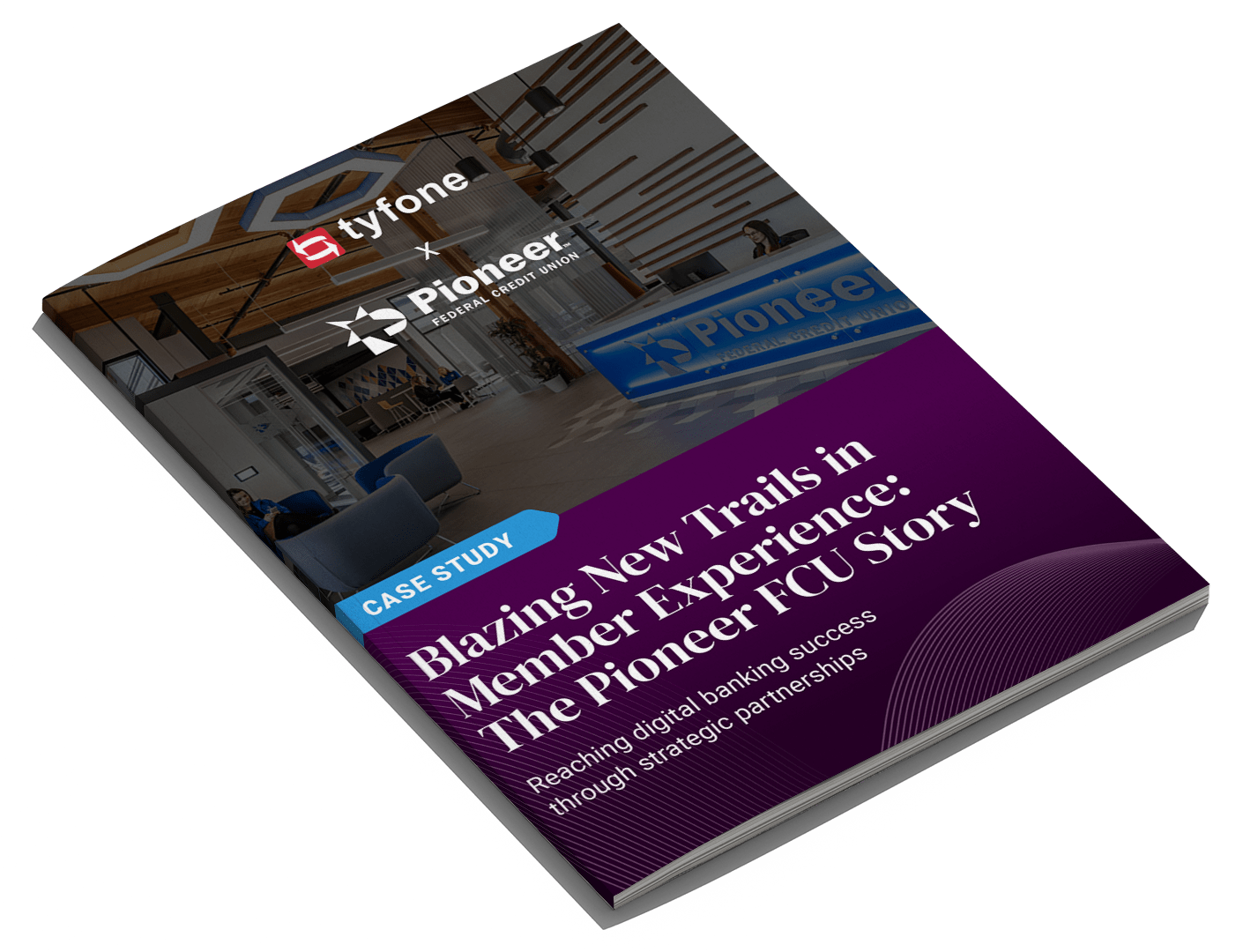
FREE CASE STUDY
Blazing new trails in member experience: The Pioneer FCU story.
In 2021, Pioneer transitioned from their legacy system to Tyfone’s nFinia Retail Digital Banking platform to offer members an ultra-modern banking experience. This move enabled the credit union to deliver a hyper-personalized digital journey while leveraging open banking and seamless third-party integrations.
Read our exclusive case study and discover how they upgraded their digital banking experience.
The “In Group” Trap
Here’s something I’ve seen play out time and time again, in boardrooms and, apparently, in the highest levels of government:
When you’re aligned with the leader — when you’re delivering good news, executing their vision, and operating within their comfort zone — you are celebrated. You are “the best.” You are boasted about, promoted, and praised. You are in the group.
But the moment you raise a concern? The moment your expertise leads you to a conclusion that challenges the direction of a leader who doesn’t want to be challenged? Suddenly, the narrative flips. You become the problem. You become difficult. You become, apparently, weak.
This is not a new phenomenon. But it is a dangerous one.
Where the Real Weakness Lives
I want to be direct: the weakness in this story does not belong to Joe Kent.
The weakness belongs to any leader — of a country, of an organization, of a team — who responds to informed, expert dissent with dismissal and character attacks. The weakness belongs to leaders who surround themselves only with voices that echo their own. The weakness belongs to those who confuse loyalty with agreement, and who mistake conviction for insubordination.
Joe Kent, by all accounts, believed in his heart of hearts that he was doing the right thing. He acted on the values that his entire career was built upon: integrity, courage, and an unwavering commitment to the mission — even when the mission means speaking truth to power.
That should not destroy an impressive career. If anything, that should make every senior leader pause and say: “I need to listen to this person.”
A Message to Senior Leaders
As a cybersecurity leader, I stand with the principle that Joe Kent’s departure represents — especially out of professional solidarity with every person who has ever been dismissed for doing exactly what they were hired to do.
We are placed in these roles as trusted advisors. We are not yes-men or yes-women. We are not decorations. We are not there to make leadership feel comfortable — we are there to keep organizations and nations safe, even when that means delivering uncomfortable truths.
We have spent decades building expertise that cannot be Googled. We lead not just with passion, but with conviction rooted in experience that most people will never have. When we raise a concern, it is not noise. It is a signal.
If you are a senior leader — of this country or of any organization — ignoring sincere concern from your most trusted advisors is not strength. It is not decisiveness. It is not leadership.
It is irresponsible. And it is dangerous.
The best leaders I have ever encountered are the ones humble enough to know what they don’t know, and wise enough to protect the people who fill in those gaps — even when what those people are saying is hard to hear.
Joe Kent’s story is a reminder that we must do better. Our security professionals — military, intelligence, and cyber alike — deserve leaders who are worthy of the trust they place in them.
Monica Parks is a results-driven IT executive with more than 25 years of experience leading technology initiatives, digital transformation, cybersecurity frameworks, and operational enhancements across banking, non-profits, and financial sectors. Her expertise spans cyber defense, forensics, IT strategy, security awareness, incident response, risk management, disaster recovery, network administration, data governance, and regulatory compliance, with a consistent focus on aligning technology with business objectives and driving operational efficiencies.
Bank3 is based in Memphis, Tennessee and has more than $495 million in assets. It has 6 branches and 4 mortgage lending centers.
Disclaimer
The views, opinions, and perspectives expressed in articles and other content published on this website are those of the respective authors and do NOT necessarily reflect the views or official policies of Tyfone and affiliates. While we strive to provide a platform for open dialogue and a range of perspectives, we do NOT endorse or subscribe to any specific viewpoints presented by individual contributors. Readers are encouraged to consider these viewpoints as personal opinions and conduct their own research when forming conclusions. We welcome a rich exchange of ideas and invite op-ed contributions that foster thoughtful discussion.