
The next generation of credit union members won’t wait for credit unions.
For credit union leaders and marketers, attracting younger members is not simply a growth initiative. It is a decision about whether the cooperative model will remain relevant to the people who will shape its future.

Credit unions have a compelling story to tell: member ownership, community ties, and a mission centered on serving people rather than outside shareholders. But a strong story is not enough if younger consumers do not see a clear reason to choose a credit union—or if the path to joining feels less convenient than the alternatives.
That is why attracting younger members deserves urgent attention. Not because every young consumer prefers the same products or channels, but because the first financial relationships people form can influence where they turn for everyday banking, borrowing, and advice as their needs grow.
Banks are ahead with younger consumers.
A 2024 McKinsey analysis of its 2023 Consumer Financial Life Survey found that banks were more often the primary financial institution for millennials and Gen Z respondents than credit unions. In the survey’s generational comparison, banks accounted for 29% versus credit unions’ 21% among millennials, and 12% versus 10% among Gen Z. For baby boomers, the pattern reversed: credit unions accounted for 39%, compared with 29% for banks. These findings are a signal of competitive positioning—not a universal measure of every credit union’s membership—and they underline the need to earn younger consumers’ consideration.
Banks also compete with scale, broad visibility, and familiar digital services. Credit unions should not assume that their community reputation or cooperative structure will automatically outweigh those advantages. Younger prospects need to encounter the credit union, understand its value, and be able to act on it without unnecessary friction.
Digital convenience is part of the relationship.
For many consumers, a financial institution is experienced through a phone long before a visit to a branch. FDIC data show that mobile banking became the primary method of bank-account access for a growing share of households across age groups between 2013 and 2023. Among households ages 25 to 34, its use as the primary access method increased almost sixfold over that decade.
Story continued below…
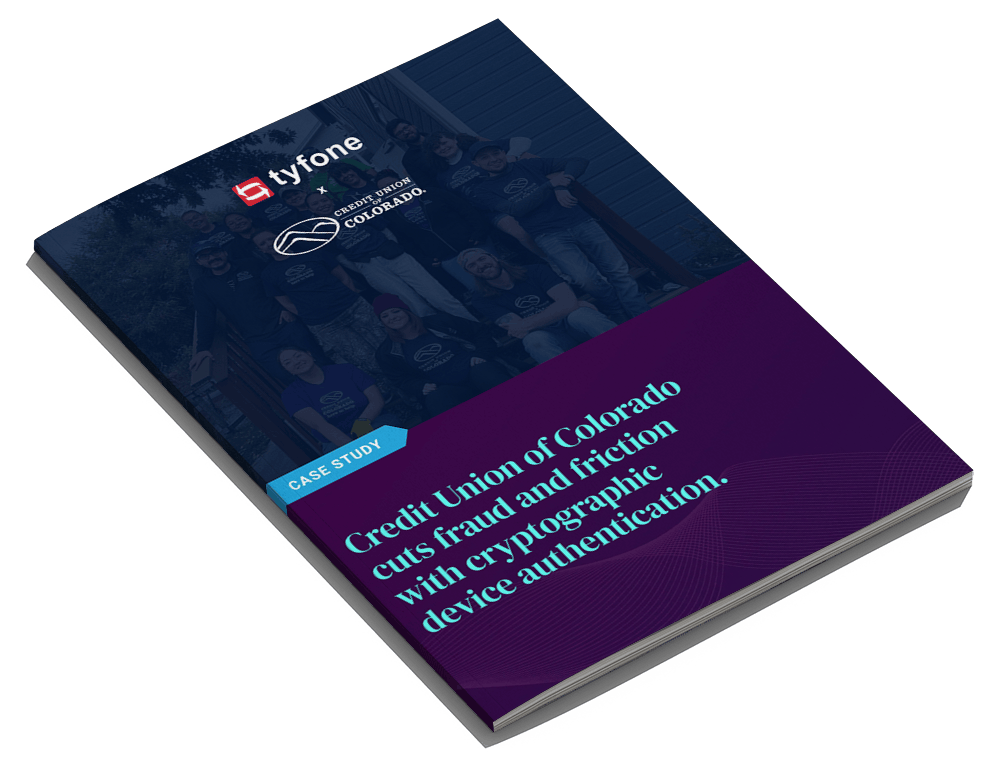
FREE CASE STUDY
CU of CO cuts fraud and friction with CDA.
Personalization in digital banking should go beyond changing colors, rearranging menus or adding a favorite team’s logo. Real personalization starts with knowing who the account holder is and understanding what they need.
Credit Union of Colorado (CU of CO)’s experience shows why trust comes first. By combining Cryptographic Device Authentication (CDA) with real-time fraud intelligence, the credit union strengthened security, reduced friction by 90% and cut manual fraud reviews by 98%.
That does not mean every young member wants a digital-only relationship. It does mean the basics matter: a smooth account-opening process, useful mobile features, clear alerts, responsive support, and straightforward ways to get help. A credit union’s personal service is a differentiator only when members can reach it at the moments that matter to them.
The opportunity is to connect values with practical value.
Younger consumers are not a single audience, and broad generational stereotypes rarely make good marketing. Some are building credit, managing student debt, or navigating their first steady paycheck. Others are saving for a home, starting a business, or supporting family. Many are balancing several of those priorities at once.
Credit unions can make their difference tangible by pairing their cooperative purpose with benefits people can recognize in everyday life: transparent fees, competitive products, accessible financial guidance, and service that helps members make informed decisions. Community involvement can strengthen that message, but it should be specific and credible—not just a slogan.
Turn attention into a better member journey.
Attracting younger members takes more than a campaign. Leaders and marketers can start by examining the full journey:
- Make the offer easy to understand. Explain who can join, what membership means, and how to get started in plain language.
- Remove avoidable digital friction. Review the mobile experience and account-opening process from a prospective member’s point of view.
- Show up where people make decisions. Build relevant partnerships with local employers, schools, community groups, and first-time homebuyer or small-business networks.
- Offer timely guidance. Create useful content and tools around real milestones—building credit, managing a first budget, financing a car, or saving for a home.
- Measure more than new accounts. Track whether new members activate, use relevant services, return for help, and stay engaged over time.
The goal is not to chase trends or imitate a national bank. It is to make the credit union’s strengths visible and accessible, while addressing the expectations that shape how people choose a financial provider.
The cost of waiting is a weaker future pipeline.
Member growth supports a credit union’s ability to serve its community and sustain its cooperative mission. If younger consumers do not see the institution as relevant today, the organization may have fewer opportunities to build relationships with them as their financial needs change. That is a strategic risk—not a reason for alarmist messaging, but a reason to act deliberately.
Credit unions already have a meaningful point of difference. The challenge is to make it matter in a younger consumer’s daily financial life: easy to discover, simple to join, convenient to use, and valuable enough to keep. The institutions that connect that promise to a strong member experience will be better positioned to welcome the next generation into the cooperative model.
Alan Bergstrom is a seasoned marketing professional dedicated to helping credit unions achieve success through impactful strategies and programs that deliver measurable results. With experience as a full-time CMO for billion-dollar credit unions and as a fractional CMO for smaller credit unions with limited resources, Alan brings versatile expertise to organizations of all sizes. For many years prior to working in the credit union industry, Alan helped many Fortune 500 companies with their branding and marketing, including Bank of America, TransAmerica, TD Canada, General Motors, Disney, Starbucks, Motorola, and Levi Strauss.
Disclaimer
The views, opinions, and perspectives expressed in articles and other content published on this website are those of the respective authors and do NOT necessarily reflect the views or official policies of Tyfone and affiliates. While we strive to provide a platform for open dialogue and a range of perspectives, we do NOT endorse or subscribe to any specific viewpoints presented by individual contributors. Readers are encouraged to consider these viewpoints as personal opinions and conduct their own research when forming conclusions. We welcome a rich exchange of ideas and invite op-ed contributions that foster thoughtful discussion.