
Part 1
Culture before strategy.
Strategy provides direction, but culture provides momentum. When employees are engaged, valued, recognized, and connected to the mission, nearly every other organizational objective becomes more achievable. As a first-time CEO, that may be the most important lesson I’ve learned.

About this series.
When I became CEO of Dort Financial Credit Union in March 2022, I expected to spend much of my time focused on growth, financial performance, strategic execution, and organizational success.
Those priorities remain important. However, one of the first and most important lessons I learned as a first-time CEO had little to do with strategic plans, technology investments, or balance sheets.
It had everything to do with people.
Like many leaders stepping into a CEO role, I assumed strategy would drive success. Over the past several years, I have come to a different conclusion. Strategy is essential, but culture determines whether strategy succeeds.
The strongest strategic plan in the world cannot overcome a disengaged workforce. Conversely, highly engaged employees can overcome obstacles, adapt to change, and execute even the most ambitious organizational goals.
That lesson became clear within months of my tenure.
Culture before strategy.
When I arrived at Dort Financial Credit Union in March 2022, the organization was navigating many of the same challenges facing credit unions across the country. Employee expectations were changing, talent competition was intensifying, and organizations were still adapting to a post-pandemic workplace.
In June of that year, we conducted an employee engagement survey. The results were difficult to ignore. Our engagement scores were well below where we wanted them to be and didn’t reflect the organization we aspired to be.
While disappointing, the survey provided something invaluable: honest feedback.
Rather than viewing the survey as a report card, we saw it as a roadmap. Employees’ message was clear: to build a stronger organization, employee engagement needed to become a strategic priority.
One of our first actions was to revisit our mission statement. While our commitment to members and communities remained unchanged, we recognized that employees drive every member interaction and organizational success.
We revised our mission statement to include employees explicitly.
That change may sound symbolic, but symbols matter. Mission statements communicate what organizations value. We wanted our team to know they were not simply part of the organization but that they were fundamental to its success and valued.
We also expanded opportunities for volunteerism and community engagement. Credit unions are founded on the philosophy of people helping people, and we wanted our employees to experience that purpose firsthand. Over the past four years, Dort employees have contributed more than 10,000 volunteer hours in the communities we serve.
Story continued below…
FREE CASE STUDIES
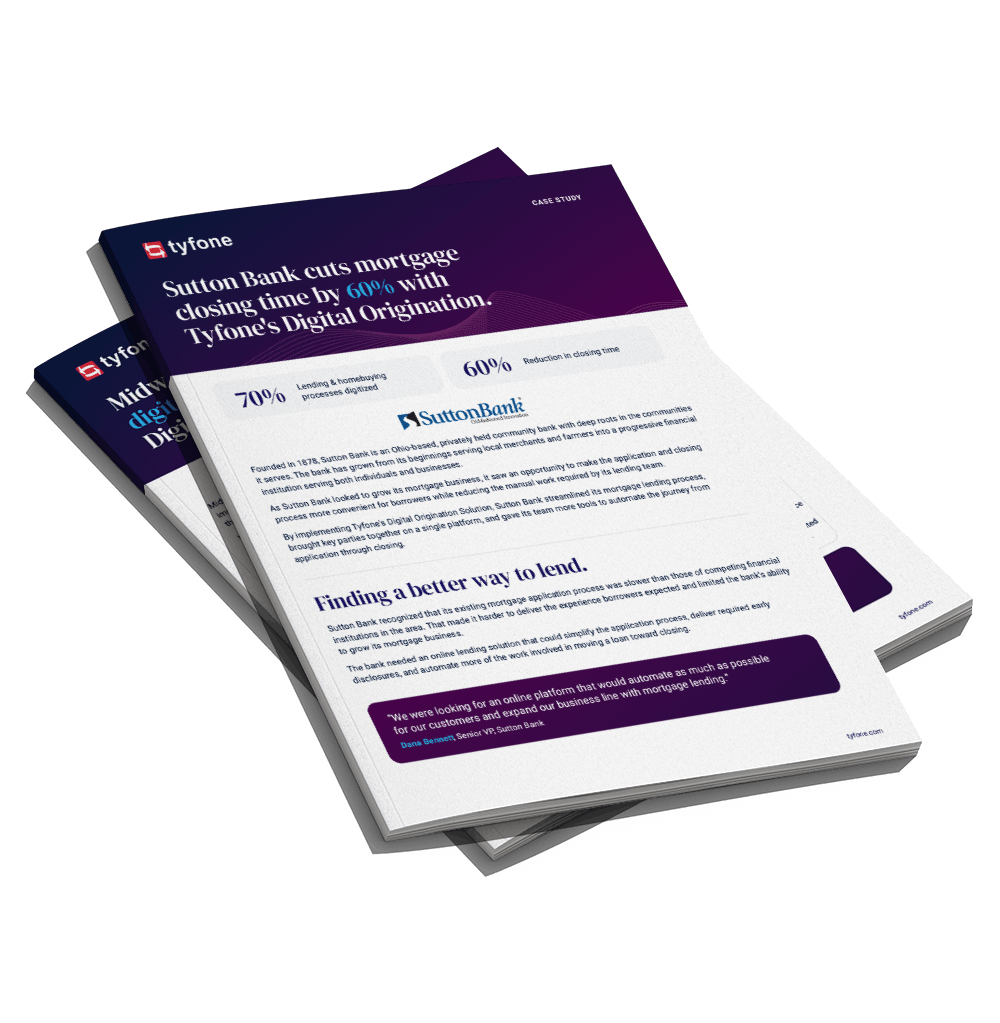
Borrowers expect speed. Your lending process should deliver.
Borrowers want answers fast. No waiting. No paperwork. No unnecessary back-and-forth. Manual processes and disconnected systems make lending harder, slowing decisions, adding work for staff, and creating friction at every step.
Tyfone makes lending faster and simpler with a flexible, white-label experience built around your policies. From application to funding, give borrowers a seamless experience across digital and in-branch channels.
We focused on communication.
Employees deserve more than announcements. They deserve understanding.
We began sharing our strategic plan throughout the organization so employees could see where we were headed and understand how their work contributed to our success. To reinforce that connection, I provide quarterly video updates that review our progress against the strategic plan, discuss organizational priorities, and highlight the work completed across the credit union.
Transparency matters. Employees are more engaged when they understand not only what decisions are being made, but why.
We listened.
We increased opportunities for conversation, made leadership more accessible, and ensured employee feedback led to action. Culture doesn’t change with a single initiative. It changes through consistent actions that build trust over time.
The results are encouraging. Today, our employee engagement score exceeds 81% and ranks above many credit unions. While I am proud of that progress, one lesson remains clear: culture work is never finished.
Our most recent survey identified several recurring themes, including employee recognition. Employees want to know their contributions matter. As leaders, we have committed to becoming more intentional about celebrating accomplishments and recognizing exceptional work. Meaningful recognition reinforces the behaviors that help organizations succeed.
Looking back, I have come to believe that culture and strategy are inseparable. A strategic plan provides direction, but culture provides the energy and commitment necessary to execute it.
Credit union leaders spend considerable time discussing growth, technology, regulation, and competition. Those conversations matter. But none are more important than the people who bring those strategies to life.
One of the most valuable lessons I have learned as a first-time CEO is that culture is built through trust, and trust is built through communication, transparency, and action.
When employees feel heard, valued, connected, and appreciated, they bring their best selves to work each day. And when that happens, members benefit.
Leadership takeaway.
Strategy provides direction, but culture provides momentum. When employees are engaged, valued, recognized, and connected to the mission, nearly every other organizational objective becomes more achievable. As a first-time CEO, that may be the most important lesson I’ve learned.
Next in the series: “The CEO seat: Accountability changes everything.”
Brian Waldron is the President and CEO of Dort Financial Credit Union, a $2.4 billion-asset institution based in Grand Blanc, Michigan. He joined Dort Financial in March of 2022, coming from Hudson Valley Credit Union, an $8 billion-asset institution located in Poughkeepsie, New York. There, he served as the Senior Vice President of Lending.
Dort Financial has 123,000 members.
Disclaimer
The views, opinions, and perspectives expressed in articles and other content published on this website are those of the respective authors and do NOT necessarily reflect the views or official policies of Tyfone and affiliates. While we strive to provide a platform for open dialogue and a range of perspectives, we do NOT endorse or subscribe to any specific viewpoints presented by individual contributors. Readers are encouraged to consider these viewpoints as personal opinions and conduct their own research when forming conclusions. We welcome a rich exchange of ideas and invite op-ed contributions that foster thoughtful discussion.