
Volatility is the new normal. Get used to it.

The relative stability in global relations we enjoyed in the post-WWII period, followed by the Pax Americana dating from the fall of the Soviet Union, began to fray with the World Trade Center attacks and the Great Financial Crisis. Covid and the recent actions of the Trump administration have clearly put that world in the rearview mirror. We live in a less certain environment both economically and geopolitically. The sheer number of disruptions precludes their categorization as one-offs.
It is hardly a secret that volatility has increased since President Trump’s second term began. The litany of disruptive actions that the President has launched is long indeed — tariffs, immigration raids, DOGE, dissing NATO, attacking Iran twice, etc. Various questions come to mind. Was all of this done on purpose to shake up the system? Would much of the disruption have occurred no matter who was President of the United States? Has the process (a la Dr. Frankenstein’s monster) now taken on a life of its own?
Bolstering the case for Trump-induced chaos is that most, if not all, of the President’s actions were telegraphed in the 2024 campaign or memorialized in the Project 2025 document. Anyone arguing that this was not the plan all along is kidding themselves. While some of the specific initiatives may seem random, they are all consistent with beliefs that the President has voiced for years.
Arguing the against position is the ascent of China on the world stage as the primary rival to America. Rising powers always challenge the reigning incumbent. It is a historical constant. Overwhelming military power no longer assures victory. Developing countries are staking out independent foreign policy positions. Regional differences already have created a multi-polar world.
But honestly, all of that is water over the dam. Looking for the genesis of the disruption is for future historians to investigate. The important question today is whether stability can be restored. I think not.
If volatility is here to stay, a change in perspective is required. A static view of hedging is no longer appropriate. Relationships that have held for years become prisons of obsolete thought.
Story continued below…
FREE PAMPHLET
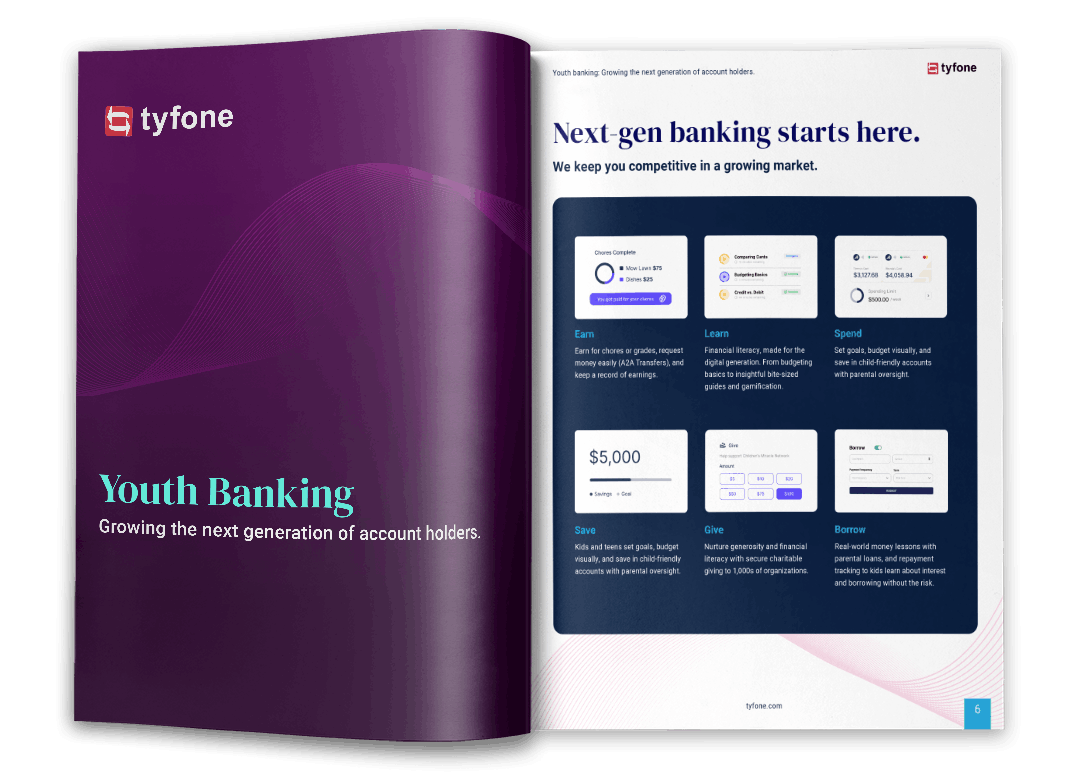
Youth banking: Growing the next generation of account holders.
Financial habits are formed early, but most financial tools are designed for adults. As a result, families often rely on cash, shared cards, or disconnected apps to teach money management, making it difficult to balance independence with oversight.
At the same time, younger generations expect intuitive digital experiences, creating a gap between how they interact with money and how financial services are delivered. Financial institutions need age-appropriate solutions that engage younger account holders while supporting parents and caregivers.
Some examples to consider:
Artificial intelligence has clearly been driving both the economy and the stock market. There has been a huge transformation in the former with the data center build-out taking over from personal consumption as the key growth factor in first quarter GDP. To say that there has been controversy over the impact of AI on employment would be an understatement. Champions of the technology argue that like other advances in the past some jobs will be lost, but new ones will be created. Critics contend both that that is little comfort to those losing their jobs and that the technology has far greater potential to destroy than to create.
Smoke from Canada is currently blanketing Upstate New York. El Niño is gathering strength in the Pacific. We have already experienced a heat dome in the United States and Europe. The weather is playing havoc with agriculture and has added to insurance disasters. To believe that weather volatility will subside is an exercise in wishful thinking.
The baby dearth has now become world-wide. Few developed countries have a fertility rate above replacement level. Much of East Asia has already seen its peak population. When the world turns from a growing population to one that shrinks, the assumptions that have supported economic activity for the last few hundred years can be called into question. Fewer young workers available to support a growing cohort of retired oldsters is a recipe for conflict.
But perhaps Groupthink is the deadliest of the factors to consider. If everyone sees the same information and acts on it in a similar fashion, wild swings in prices will not only occur but must be expected. This, combined with the use of artificial intelligence, just turbocharges the risk.
Both the global economy and the markets have entered a new regime — one where volatility is the base case. This means that the economic actors will, of necessity, build resiliency into their processes. Resiliency costs money. That means the key takeaway from our brave new world is higher inflation and higher interest rates.
Jamesson Associates is a financial advisory firm for community banks and thrifts based in Scottsville, New York.
Disclaimer
The views, opinions, and perspectives expressed in articles and other content published on this website are those of the respective authors and do NOT necessarily reflect the views or official policies of Tyfone and affiliates. While we strive to provide a platform for open dialogue and a range of perspectives, we do NOT endorse or subscribe to any specific viewpoints presented by individual contributors. Readers are encouraged to consider these viewpoints as personal opinions and conduct their own research when forming conclusions. We welcome a rich exchange of ideas and invite op-ed contributions that foster thoughtful discussion.