
Credit unions don’t have a trust problem. They have a speed problem.

Credit unions have spent decades building something fintechs cannot buy: trust, member ownership, local credibility, and a service culture that still resonates in an algorithm-driven market. Those advantages remain real. But they are no longer enough on their own. The competition credit unions face today is not only the bank across town. Companies like Amazon, Chime, SoFi, PayPal and Venmo have trained every consumer, including credit union members, to expect instant access and constant improvement.
The numbers confirm the urgency. As of Q2 2026, federally insured credit unions held $2.5 trillion in assets and served 145 million members, an industry still growing in aggregate. Yet the number of federally insured credit unions has fallen by more than 3.5% in a single year. During that same period, membership at the median credit union declined 0.5 percent. The movement is expanding. Many individual institutions are not.
While many have observed that the common thread among the credit unions losing ground is size, we believe that is just as much about speed.
At Amazon, Jeff Bezos treated speed as a discipline, enforcing a system where high-quality, high-velocity decisions were routinely made with roughly 70 percent of the information leaders wished they had. Waiting for 90 percent, he argued, usually just means being late. Credit unions face exactly these decisions constantly. Whether deciding on a fintech partnership, an AI pilot, or a new account-opening flow, credit unions too often apply the diligence appropriate for a merger or core conversion to a decision that could be tested safely in ninety days.
That distinction matters more than most boards realize. A merger or a material change in risk appetite is a one-way door, and it deserves extensive deliberation. A limited marketing experiment or a narrowly scoped pilot is a two-way door, reversible, low-stakes, and best resolved by testing rather than debating. Too many credit unions apply a one-way-door process to two-way-door decisions, and the predictable result is committee fatigue, frustrated vendors and a market that moves on without them. A six-month delay that once seemed harmless can now enable a competitor to establish the relationship and make the next offer first.
Story continued below…
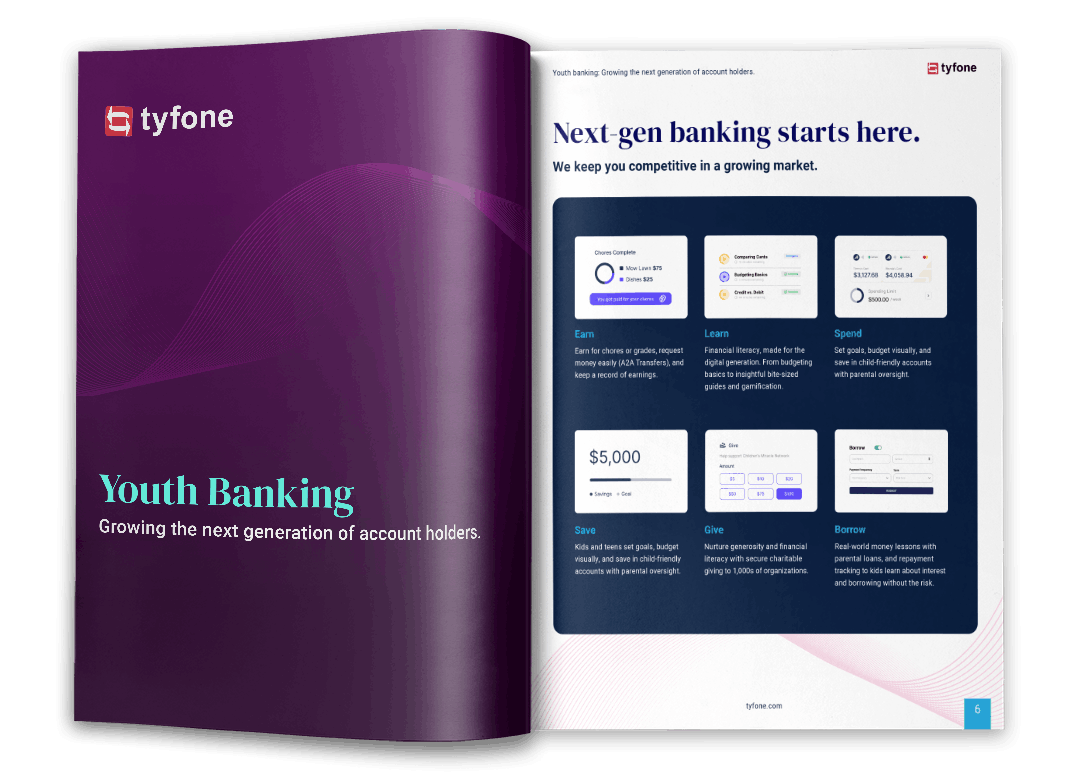
FREE PAMPHLET
Youth banking: Growing the next generation of account holders.
Financial habits are formed early, but most financial tools are designed for adults. As a result, families often rely on cash, shared cards, or disconnected apps to teach money management, making it difficult to balance independence with oversight.
At the same time, younger generations expect intuitive digital experiences, creating a gap between how they interact with money and how financial services are delivered. Financial institutions need age-appropriate solutions that engage younger account holders while supporting parents and caregivers.
Members feel this gap directly, even if satisfaction surveys don’t capture it. An auto loan applicant experiences response time, not governance structure. A small business owner experiences whether the credit union can give a timely answer, not the strategic plan behind it. Members may like their credit union, trust the people, appreciate the branch, while quietly moving their higher-value activity to a fintech that answered faster. The institution keeps the goodwill and loses the relationship.
This is not an argument for recklessness. The financial services industry offers ample examples of technology implementations that moved forward without sufficient testing, contingency planning or operational discipline, leaving customers unable to access basic services and exposing institutions to regulatory, financial and reputational consequences. Speed without disciplined execution is its own hazard. The lesson is not to slow down. Nor is it to rush. Credit unions need both faster decision-making before launch and more rigorous execution during launch.
Getting there starts with governance. Boards should set risk appetite and approve the handful of decisions that genuinely warrant board-level scrutiny, then get out of the way of everything else. The useful questions change:
- What’s the risk of waiting?
- Is this reversible?
- What would a ninety-day pilot teach us that another committee meeting won’t?
Consensus culture, so central to the cooperative model, deserves a second look too, since unanimity has a way of setting an institution’s pace to match its most cautious voice. Bezos’ idea of “disagree and commit” is not foreign to cooperation. It is what keeps cooperation from becoming paralysis.
It also means measuring what currently goes unmeasured. While credit unions track capital, delinquencies and member satisfaction closely, few track decision cycle time, product-launch time or application-to-decision time. What is not measured tends to become culturally invisible, and the institutions losing members are not as much the smallest ones as they are the most comfortable: content with slow decisions, annual planning cycles, and satisfaction scores that quietly conceal lost share of wallet.
In practice, a faster credit union gets to “no” sooner. It picks the two or three initiatives that matter most. It gives each objective a senior owner and a deadline, and pulls risk, compliance and technology into the conversation at the start rather than at the end of a sequential review. Problems surface while they are still cheap to fix, and small improvements compound quietly over time, which is precisely how digital competitors create the impression that they never stop getting better.
None of the embrace of speed requires credit unions to become something foreign to what they are. Fintechs build speed first and spend years trying to earn the trust, deposits and regulatory maturity credit unions already have. Credit unions hold the harder advantage already in hand. The only question left is whether they will move fast enough to use it before members decide the answer for them.
Olden Lane is a boutique financial services firm dedicated to the credit union industry.
Disclaimer
The views, opinions, and perspectives expressed in articles and other content published on this website are those of the respective authors and do NOT necessarily reflect the views or official policies of Tyfone and affiliates. While we strive to provide a platform for open dialogue and a range of perspectives, we do NOT endorse or subscribe to any specific viewpoints presented by individual contributors. Readers are encouraged to consider these viewpoints as personal opinions and conduct their own research when forming conclusions. We welcome a rich exchange of ideas and invite op-ed contributions that foster thoughtful discussion.