
Part 3
The relationship that matters most: Earning board trust.
Looking back, one of my most important lessons as a first-time CEO is that trust is not a one-way responsibility. Good governance requires the CEO and the board to commit to transparency, accountability, continuous improvement, and shared respect.

About this series.
When I became CEO of Dort Financial Credit Union in March 2022, I expected to spend much of my time focused on growth, financial performance, strategic execution, and organizational success.
Those priorities remain important. However, one of the first and most important lessons I learned as a first-time CEO had little to do with strategic plans, technology investments, or balance sheets.
It had everything to do with people.
Like many leaders stepping into a CEO role, I assumed strategy would drive success. Over the past several years, I have come to a different conclusion. Strategy is essential, but culture determines whether strategy succeeds.
The strongest strategic plan in the world cannot overcome a disengaged workforce. Conversely, highly engaged employees can overcome obstacles, adapt to change, and execute even the most ambitious organizational goals.
That lesson became clear within months of my tenure.
In my previous article, I discussed how accountability changes when you become CEO. Every decision ultimately carries your recommendation and your responsibility.
Since becoming CEO, I’ve learned that accountability alone isn’t enough.
To be effective, a CEO must build trust with the Board of Directors.
When people discuss governance, the conversation often revolves around policies, bylaws, strategic plans, and committee structures. While those elements matter, the most important part of the CEO-board relationship is simpler: trust.
Without it, governance becomes transactional. With it, governance becomes transformational.
When I arrived at Dort Financial Credit Union in 2022, I inherited a dedicated Board of Directors that cared deeply about the organization, its members, employees, and communities. We also recognized that if the organization was going to evolve, governance needed to evolve with it.
Trust is not established through a presentation or automatically granted because someone holds the title of CEO. It is earned over time by communicating openly, doing what you say you will do, avoiding surprises, and being willing to have difficult conversations!
One of our first steps was creating a strategic pillar dedicated to the evolution of the Board of Directors. Credit unions devote significant resources to training employees, developing future leaders, and recruiting executives who can help an organization scale. Boards don’t always devote the same attention to improving their own effectiveness.
Our board chose to do that hard work.
We engaged a governance consultant to help the board take an honest and introspective look at itself. The process was not always easy. Meaningful self-assessment rarely is.
Our directors care deeply about the credit union. However, effective governance requires more than commitment and good intentions. It requires a commitment to challenge longstanding practices, evaluate effectiveness, and embrace continuous improvement.
Story continued below…
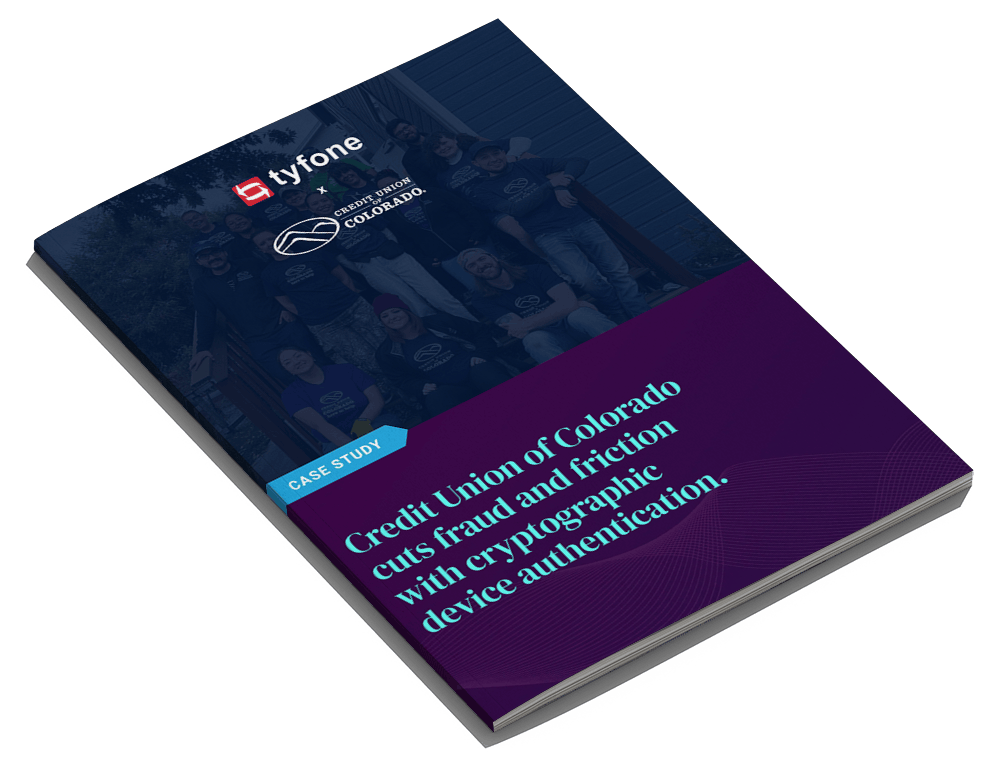
FREE CASE STUDY
CU of CO cuts fraud and friction with CDA.
Personalization in digital banking should go beyond changing colors, rearranging menus or adding a favorite team’s logo. Real personalization starts with knowing who the account holder is and understanding what they need.
Credit Union of Colorado (CU of CO)’s experience shows why trust comes first. By combining Cryptographic Device Authentication (CDA) with real-time fraud intelligence, the credit union strengthened security, reduced friction by 90% and cut manual fraud reviews by 98%.
Several meaningful changes followed.
We established a Governance and Nominations Committee that has worked tirelessly to strengthen governance practices, establish standards for board service, identify future board talent, and hold directors accountable to those standards.
We also created a Finance Committee to provide greater insight into the organization’s financial performance and corporate KPI’s. Rather than focusing only on annual budget approval, the committee helps directors understand key metrics, trends, risks, and opportunities while improving the budget process.
We redesigned board meetings to focus less on the past and routine, and more on the future through strategic conversation. A consent agenda consolidated standard reports, approvals, and noncontroversial items into a single action item, clearing time for meaningful discussion.
We also added a strategic discussion section to every meeting. These conversations focus on industry trends, regulation, technology, competition, changing member expectations, and long-term opportunities. Rather than simply reviewing what has happened, we spend more time considering what may happen next and how we should respond.
Shortly after I became CEO, we also introduced what we call a “mini planning session.” Once a year, the board and I step away from the formal boardroom for a Friday evening dinner followed by a full-day Saturday working session. No other executives attend.
The dinner allows us to know one another beyond agendas, presentations, and motions. The Saturday session provides uninterrupted time to focus on topics that deserve deeper attention, including CEO and executive succession, long-term strategy, organizational risk, and future opportunities.
At our most recent session, we spent nearly half a day examining branch performance and profitability in relation to specific market demographics and statistics. These issues are vital to the organization’s success but difficult to explore fully during a standard board meeting.
These sessions also create room for difficult conversations. Avoiding challenging subjects does not strengthen an organization. Trust lets those conversations happen openly, respectfully, and productively.
Importantly, trust is a two-way street.
Directors must trust that management is competent, transparent, and able to execute the organization’s strategy. The CEO must also trust that directors act in the credit union’s best interests, provide appropriate oversight, and foster an environment that welcomes candid dialogue.
The CEO must trust the board enough to bring forward difficult issues, acknowledge uncertainty, and share concerns before every answer is known. Likewise, the board must trust management enough to remain focused on governance rather than moving into operations. Both of which are extremely difficult and take time.
When that mutual trust exists, governance becomes a partnership. Management does not feel compelled to withhold information, and directors do not feel compelled to manage the organization. Both can remain within their respective roles while working toward the same mission.
Looking back, one of my most important lessons as a first-time CEO is that trust is not a one-way responsibility. Good governance requires the CEO and the board to commit to transparency, accountability, continuous improvement, and shared respect.
When that foundation exists, difficult conversations become productive, challenges become manageable, opportunities become clearer, and the organization becomes stronger.
Leadership takeaway.
Board trust is not built during a crisis. It is built long before one occurs, and it must flow in both directions. The strongest governance partnerships develop when CEOs and directors trust each other enough to be candid, respect their respective roles, and continuously improve together.
Brian Waldron is the President and CEO of Dort Financial Credit Union, a $2.4 billion-asset institution based in Grand Blanc, Michigan. He joined Dort Financial in March of 2022, coming from Hudson Valley Credit Union, an $8 billion-asset institution located in Poughkeepsie, New York. There, he served as the Senior Vice President of Lending.
Dort Financial has 123,000 members.
Disclaimer
The views, opinions, and perspectives expressed in articles and other content published on this website are those of the respective authors and do NOT necessarily reflect the views or official policies of Tyfone and affiliates. While we strive to provide a platform for open dialogue and a range of perspectives, we do NOT endorse or subscribe to any specific viewpoints presented by individual contributors. Readers are encouraged to consider these viewpoints as personal opinions and conduct their own research when forming conclusions. We welcome a rich exchange of ideas and invite op-ed contributions that foster thoughtful discussion.